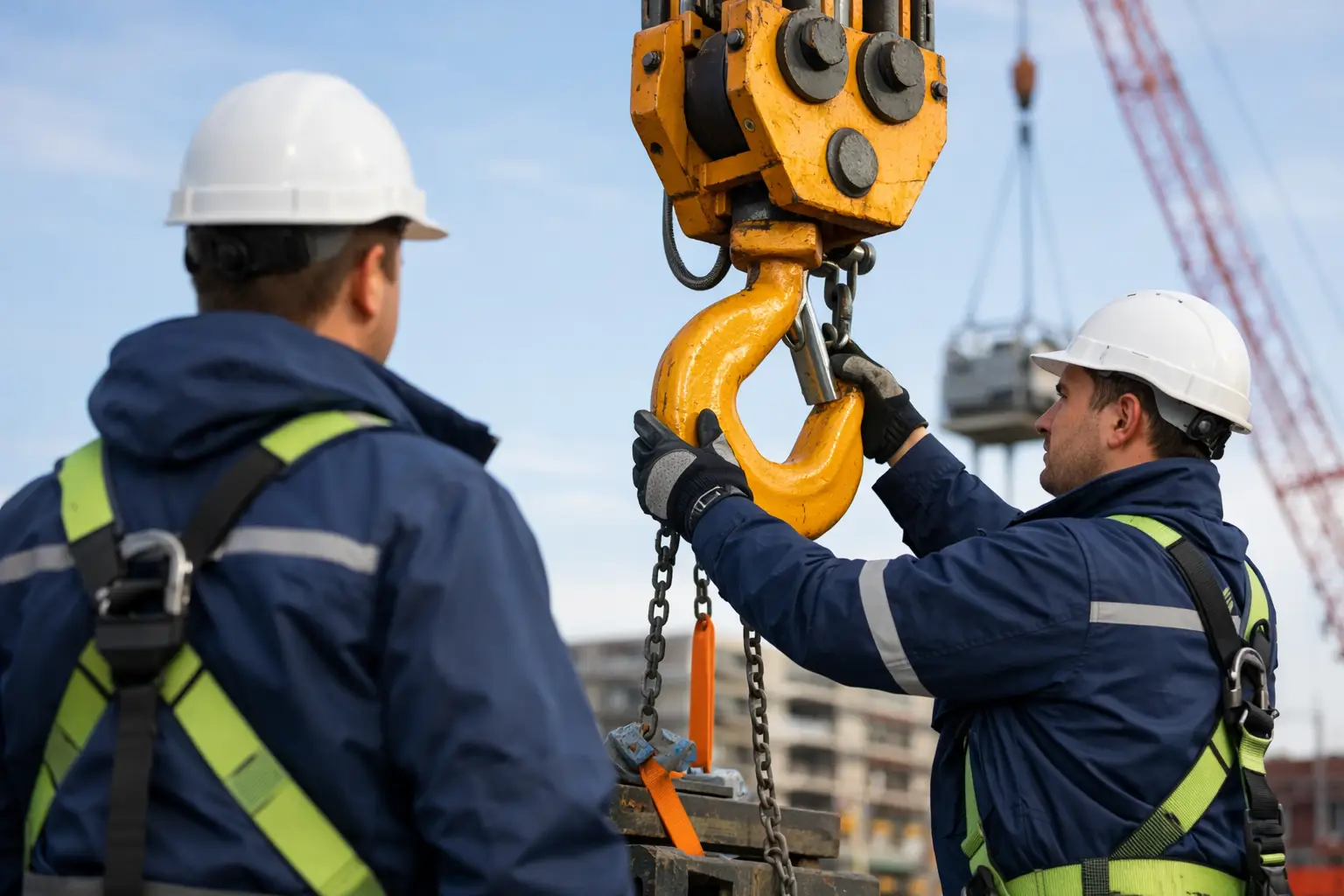
A new hoist or crane can look ready for service the moment it is positioned in the facility. In practice, the installation is where its safety, lifting performance, and long-term availability are decided. This lifting equipment installation guide explains the engineering and site controls that should be in place before a load is ever lifted.
For plant managers, project engineers, and maintenance teams, installation is not simply a delivery milestone. It is a controlled handover from design assumptions to real operating conditions. Clearances may differ from drawings, building steel may have undocumented alterations, power supplies may be unsuitable, and actual loads may not behave as anticipated. Identifying these issues early protects people, equipment, and production schedules.
Start the Lifting Equipment Installation Guide Before Delivery
A successful installation begins with a proper site assessment. The equipment type, rated capacity, duty cycle, travel path, load dimensions, and lifting frequency must all reflect the actual job. A system selected only by maximum weight can be under-specified if it will make frequent lifts, handle off-center loads, or operate in a harsh environment.
The assessment should also confirm how the load will be picked up and set down. A hoist may have adequate capacity, for example, but a hook approach that leaves the load short of a machine bed or storage position creates an operational problem from day one. Similarly, crane runway length, end clearances, lift height, and operator visibility need to be checked against the finished facility, not only the original building plan.
For existing facilities, verify available headroom and inspect for obstructions such as ducting, fire protection systems, cable trays, lighting, process piping, and access platforms. These services often occupy the same upper space required by overhead lifting equipment. Resolving clashes before mobilization is faster and less disruptive than modifying installed equipment or site services later.
Confirm the Structure Can Carry the System
The supporting structure is central to safe crane and hoist installation. Building columns, beams, roof trusses, monorails, brackets, and foundations must be assessed for the imposed loads. These are more than the equipment’s self-weight and rated load. They can include wheel loads, impact effects, lateral forces, runway alignment tolerances, and forces created during acceleration, braking, or load sway.
Do not assume an existing beam is suitable because it appears substantial. Its section, span, connections, condition, previous modifications, and load path all matter. In some cases, a freestanding gantry structure or purpose-designed support steel is the better solution. It may add initial cost, but it avoids transferring loads into a building that was never engineered for crane service.
Structural work should be coordinated with the lifting system design. The equipment supplier, installer, and project team need one agreed set of dimensions and responsibilities. This prevents a common issue: steel installed to an early drawing that does not match final hoist dimensions, crane wheel centers, or electrical requirements.
Prepare the Work Area and Installation Method
Installation work introduces temporary risks that differ from normal facility operations. Equipment may be lifted at height, work crews may use mobile access equipment, and sections of runway or crane may be assembled above production areas. A documented installation method should define the sequence, lifting points, temporary supports, exclusion zones, access controls, and communication arrangements.
The work area should be released only after operational hazards are controlled. This may mean isolating nearby machinery, rerouting pedestrian traffic, protecting sensitive stock, and restricting vehicle movement below the work zone. If installation takes place during a shutdown, the schedule must still allow enough time for alignment, electrical checks, testing, and correction work. Compressing these stages to restart production sooner can create a much longer outage later.
Site conditions also influence the installation approach. Indoor work may be limited by headroom and floor loading. Outdoor work may require wind limits, ground-bearing checks for mobile cranes, and weather contingency plans. For facilities that cannot stop operations, phased installation can reduce disruption, though it requires tighter coordination and may increase the overall project duration.
Install Mechanical Components With Alignment in Mind
Mechanical installation is not complete when bolts are tightened. Crane runways need correct gauge, level, straightness, and rail alignment so wheels travel smoothly and loads are not imposed unevenly on the structure. Poor alignment increases wheel wear, bearing loads, motor demand, and the likelihood of skewing during travel.
For monorails, jib cranes, and workstation systems, confirm the beam path, support connections, end stops, and clearances throughout the full travel range. The hoist and trolley must move freely without fouling building elements, electrical festoon systems, or adjacent equipment. End stops and bumpers should be installed as designed, not treated as optional finishing items.
Fasteners, welds, and anchor points require inspection according to the approved design and installation procedure. Where torque settings apply, they should be recorded. Where welding is required, the work should be carried out by qualified personnel and inspected before the system is loaded. Paint damage, corrosion protection, and sharp edges should also be addressed before handover, particularly in humid or corrosive environments.
Complete Electrical, Control, and Safety Connections
Electrical work must match the equipment voltage, control arrangement, travel distance, and operating environment. Confirm that isolators are accessible, properly labeled, and suitable for safe lockout during maintenance. Cable routing should allow movement without snagging, excessive tension, or abrasion.
Control pendants, radio controls, emergency stops, limit switches, overload protection, and warning devices should be tested as a complete system. A functioning emergency stop is necessary, but it does not replace well-positioned controls, clear operator sightlines, or a defined lifting procedure.
Limit switches deserve particular attention. Hoisting upper and lower limits, trolley travel limits, and crane travel limits must stop motion before the hook block, trolley, or crane reaches a damaging position. Their settings should account for realistic hook attachments and operating clearances, not just an unloaded test condition.
Test, Inspect, and Commission Before Release
Commissioning verifies that the installed system performs as designed under controlled conditions. It should include no-load functional tests, travel tests, brake checks, limit-switch tests, control checks, and testing with appropriate loads in accordance with applicable requirements. The goal is not merely to prove that the equipment can lift. It is to confirm predictable operation across the motions the operators will use every shift.
During testing, observe for unusual noise, vibration, wheel binding, uneven travel, brake drift, electrical faults, or excessive load swing. Small symptoms at commissioning are often early warnings of alignment, adjustment, or control issues. They are easier to correct before the system enters routine production service.
The handover file should include equipment details, rated capacity, drawings, test and inspection records, operating instructions, maintenance requirements, and any limitations identified during installation. Operators and maintenance personnel need practical training on normal operation, pre-use checks, safe load handling, emergency response, and the conditions that require equipment to be removed from service.
Plan Maintenance From the First Day of Operation
Installation quality and maintenance planning are closely linked. A well-installed crane can still suffer premature wear if inspections are irregular, lubrication is missed, or damaged components are allowed to remain in service. Conversely, an accessible design with clear isolation points and locally available spare parts reduces the time and cost of planned maintenance.
Set inspection intervals according to equipment type, usage intensity, environment, and applicable regulations. A lightly used workshop hoist and a production-line overhead crane should not automatically follow the same schedule. Maintenance records should capture defects, repairs, adjustments, and recurring issues so the site can identify patterns before they cause downtime.
For projects requiring custom lifting solutions, MFEI approaches installation as part of the full equipment lifecycle: site assessment, engineered design, controlled installation, commissioning, spare-parts support, and ongoing service. That continuity helps ensure the system remains fit for the facility as operating demands change.
The best time to prevent a lifting failure is before the first production lift. Give the structural checks, installation controls, testing, and operator handover the same attention given to equipment selection, and the system will be better positioned to deliver safe, dependable service for years.