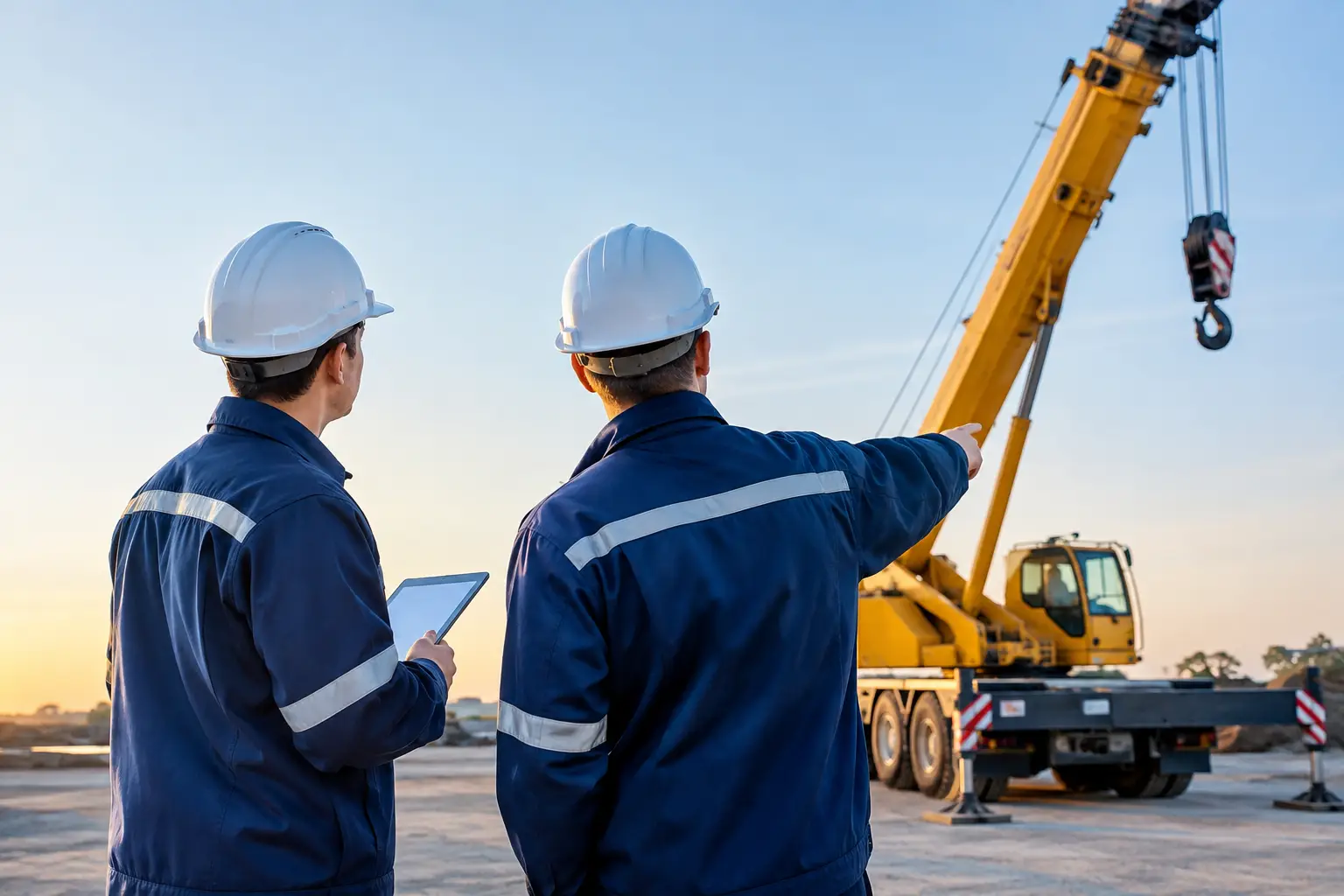
A production line waiting on a lift is not a minor inconvenience. It can delay material flow, hold up deliveries, put labor on standby, and create avoidable safety exposure. The decision between crane rental versus purchase should therefore begin with the work the crane must perform, not simply the monthly price.
For plant managers, project engineers, and procurement teams, the right answer depends on lifting frequency, load characteristics, facility constraints, project duration, and the level of control required over uptime. Rental can be commercially sensible for a defined need. A purchased crane system can deliver better operational value where lifting is a permanent part of the facility.
Crane Rental Versus Purchase: Start With the Application
Before comparing quotations, define the lifting duty in practical terms. What material is being lifted, how often, across what travel path, and under what conditions? A crane used once a month for occasional maintenance has a very different economic and engineering case than one serving a machining cell every shift.
The load is only one part of the requirement. Teams should also consider lift height, span, required hook coverage, headroom, lifting speed, positioning accuracy, operator access, power availability, and clearance around existing machinery. A system that appears adequate on paper can become restrictive if it cannot reach the required pick points or interferes with production layout.
A rental arrangement is generally best evaluated as access to equipment for a specific period. Purchasing is an investment in a lifting system designed around the site, production process, and expected operating life. Treating both options as identical products often leads to a decision based on the wrong cost comparison.
When Crane Rental Makes Commercial Sense
Crane rental is often appropriate when the work has a clear end date or when the lifting demand is temporary. Construction-related work, shutdown maintenance, equipment installation, emergency recovery, and short-term capacity peaks are common examples.
The principal advantage is lower upfront commitment. Rather than allocating capital to a system that may sit idle after the project, the business can align expenditure with the period of use. Rental may also provide access to a lifting capacity that is needed only for one unusual or oversized lift.
Rental can be a practical solution in four situations:
- A planned project has a fixed, short duration.
- The required lifting capacity is outside normal facility needs.
- Demand is uncertain and the organization needs time to confirm the operating pattern.
- Capital expenditure is constrained while an immediate lifting requirement cannot wait.
However, rental is not automatically the lowest-cost option. Delivery, mobilization, installation, operator requirements, repeated hire periods, site preparation, and scheduling limitations can change the economics. If the same crane is hired repeatedly over several years, the accumulated rental cost may exceed the value of a properly specified permanent system.
Rental equipment may also involve compromises in configuration. A general-purpose unit may perform the lift, but it may not provide the ideal span, hook approach, travel coverage, or workflow integration for the facility. For intermittent work, that compromise can be acceptable. For daily production, it can become a source of wasted movement and operating friction.
When Purchasing Is the Stronger Long-Term Choice
Purchasing is usually the more suitable route when lifting is central to daily operations. This includes production handling, recurring loading and unloading, die changes, mold handling, fabrication work, warehouse transfer, and maintenance activities that are fundamental to keeping the plant operational.
A purchased overhead crane, gantry crane, jib crane, hoist, or custom lifting system can be engineered to suit the actual building structure and material flow. The design can account for runway length, building columns, available headroom, work zones, load capacity, duty classification, control method, and future expansion. This supports safer handling and reduces the repeated manual workarounds that often develop around poorly matched equipment.
Ownership also provides more control over equipment availability. The system is on site, familiar to operators, and available when production requires it. With a planned inspection and maintenance program, businesses can manage wear, replace critical components before failure, and reduce the risk of a lifting issue disrupting an essential process.
The initial purchase cost is higher, particularly where structural modifications, runway beams, electrical work, or custom engineering are required. Yet the useful life of well-maintained lifting equipment is measured in years, not months. For a facility with regular duty, spreading the investment across that operating life can make ownership more economical than continuous rental.
Compare Lifecycle Cost, Not the Starting Price
The most useful financial comparison is not purchase price against rental rate. It is the total cost of achieving safe, reliable lifting capacity over the required period.
For rental, include the hire charge, transport, setup, dismantling, extensions, site downtime during mobilization, and any cost associated with booking equipment at short notice. Also consider the cost of an unavailable rental unit if the project schedule changes.
For purchase, account for engineering, equipment supply, installation, testing, inspection, operator training, service, spare parts, and planned maintenance. These are not optional extras. They are part of operating a lifting system responsibly and protecting its working life.
A simple utilization calculation can clarify the decision. Estimate how many lifts are performed each week, how many hours the equipment is needed, and how much production value depends on those lifts being completed on time. Then project those requirements over three, five, or more years. A rental solution can look economical for the first few months while becoming costly once the equipment is needed continuously.
There is also an indirect cost that should not be ignored: inefficient material movement. If employees must wait for rented equipment, reposition loads manually, or use a lifting arrangement that does not serve the work area properly, cycle times increase. The right permanent system can improve handling flow even when its direct purchase cost is higher.
Engineering Fit Affects Safety and Productivity
Lifting equipment should be selected for the full duty cycle, not just the maximum load. A crane rated for the required capacity may still be unsuitable if its hoist duty, travel speeds, controls, or structural arrangement do not match the work.
For example, a maintenance team may need a compact jib crane to cover a pump or motor removal zone. A fabrication operation may require an overhead crane that reaches multiple workstations without obstructing forklifts. A warehouse may need coordinated lifting coverage around storage racks, dock areas, and existing building services. Each case calls for an assessment of the site rather than a one-size-fits-all selection.
A purchased solution has an advantage where these details matter. It can be designed around the building and process, including safe load paths, required clearances, and practical maintenance access. The result is not simply a crane in the facility. It is a material-handling system that supports the way the facility works.
This does not mean rental is less safe by default. Rental equipment can be appropriate and safe when it is correctly specified, inspected, installed, and operated. The key difference is whether the equipment is a temporary means of completing a defined task or a long-term element of the site’s operating infrastructure.
Service, Spare Parts, and Downtime Planning
Ownership brings responsibility, but it also creates the opportunity to manage reliability proactively. Regular inspection, preventive maintenance, lubrication, electrical checks, brake adjustment, wire rope or chain assessment, and condition-based replacement all help protect availability.
When a crane supports production, service response and parts availability should influence the purchase decision as much as lifting capacity. A low initial price offers limited value if a failed contactor, brake component, pendant control, or hoist part leaves the system unavailable for an extended period. Working with a provider that can support installation, maintenance, troubleshooting, and locally available spare parts makes the ownership model more dependable.
MFEI approaches lifting equipment as a lifecycle requirement. Engineering input at the start helps align the system with the site and budget, while maintenance support and spare-parts planning help preserve performance after installation. That continuity is particularly valuable for facilities where lifting downtime affects the entire operation.
Make the Decision Around Your Operating Horizon
Choose rental when the lift is temporary, specialized, uncertain, or tied to a project with a defined completion date. Choose purchase when lifting is recurring, essential to workflow, and likely to remain part of the facility’s operation for years.
If the decision remains close, assess the cost of being unable to lift when needed. That question often reveals more than a comparison of monthly charges. The best choice is the one that gives your team the required lifting capacity, safely and predictably, for the real demands of the work ahead.