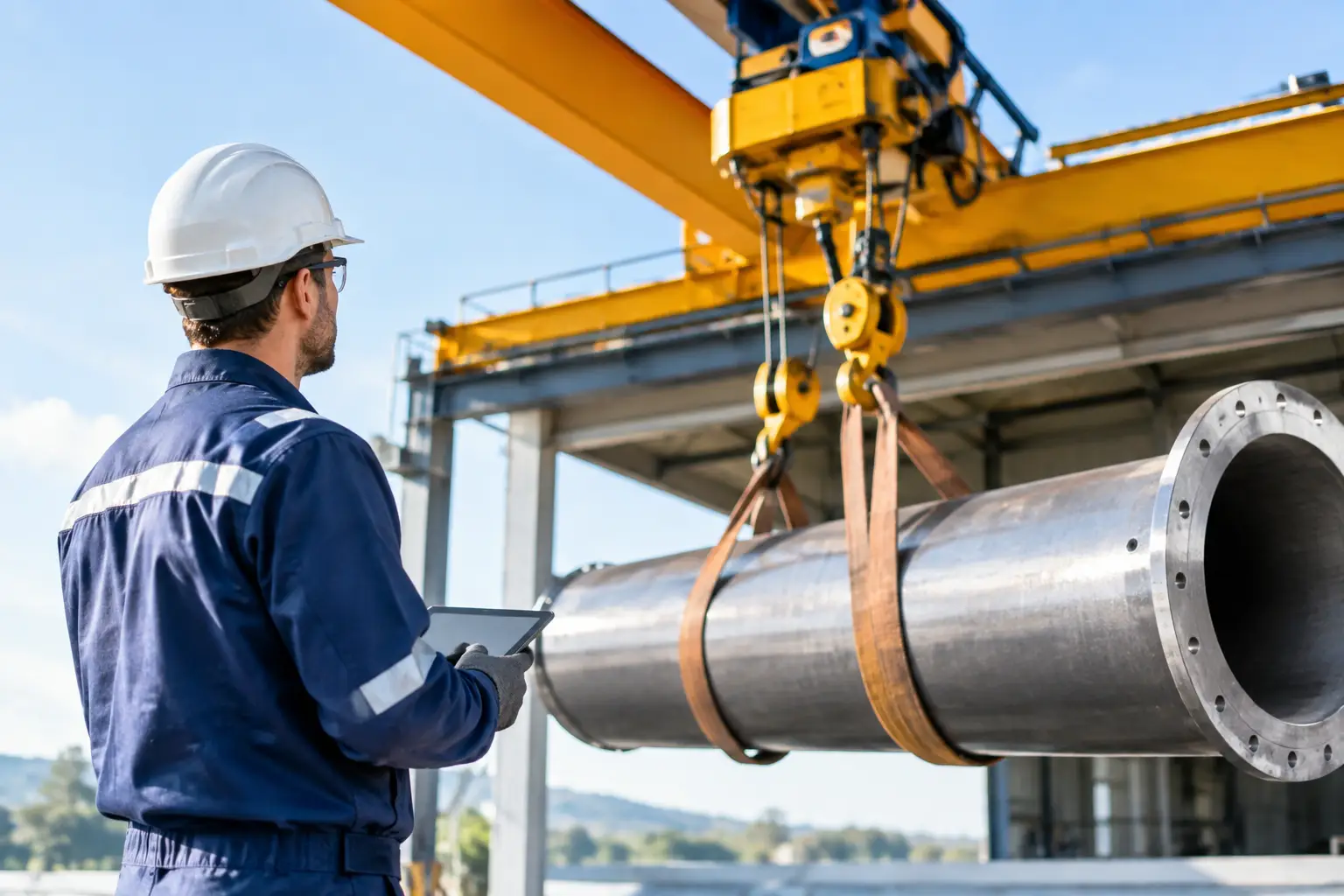
A standard hoist may have the rated capacity your team needs, yet still be the wrong answer if it cannot clear a low roof, reach a work cell, handle an unusual load, or fit around existing production equipment. So, can lifting equipment be customized? Yes – and for many industrial facilities, it should be. The objective is not to add features for their own sake. It is to engineer a lifting solution that moves the required load safely, predictably, and economically within the realities of the site.
Customization can range from selecting the right lifting speed and pendant location to designing a complete crane runway for a constrained building. The right level depends on the application, operating duty, available space, future production plans, and maintenance expectations.
Can Lifting Equipment Be Customized? Yes, Within Engineering Limits
Most lifting equipment can be adapted to a specific process, but customization must start with sound engineering. A crane, hoist, winch, or material-handling system is a safety-critical asset. Changes to its capacity, configuration, controls, or supporting structure must preserve proper load paths, operating clearances, stability, and access for inspection and service.
A fit-for-purpose design may include a customized single-girder or double-girder overhead crane, a jib crane with a tailored outreach, a monorail system following a production route, or a winch arrangement designed around a particular pulling or lifting task. The equipment is then matched to the building, the load, and the people who will use it.
There are limits. Customization cannot compensate for an inadequate building structure, an undefined load weight, poor operating practices, or a request to exceed the equipment’s rated capacity. In those cases, the correct response may be structural reinforcement, a different lifting method, revised workflow, or a larger system.
What Parts of a Lifting System Can Be Tailored?
The most valuable custom features are usually those that solve a measurable operational problem: limited headroom, slow loading cycles, frequent positioning errors, difficult access, or recurring downtime. Equipment selection should follow the work, not the catalog.
Capacity, duty class, and lifting speed
Capacity is the starting point, but it is not simply the heaviest item on the floor. Engineers must consider the weight of lifting beams, hooks, grabs, magnets, or other below-the-hook devices as part of the total lifted load. They also need to account for how often the equipment will operate, how far it travels, and whether it will handle loads close to its maximum capacity every day.
Lifting speed can also be customized. A maintenance workshop may need precise, slower lifting for machine components, while a production line may require faster handling to avoid bottlenecks. Two-speed or variable-speed controls can provide a controlled approach near the load position while maintaining productive travel speeds elsewhere.
Span, lift height, and available headroom
Building geometry frequently drives the design. The crane span must cover the working area without creating interference at columns, walls, racks, machinery, or access doors. Required hook travel must account for both the highest pickup point and the lowest safe set-down position.
Where roof height is restricted, a low-headroom hoist or an optimized crane arrangement may recover valuable lifting height. Where the facility is long or has multiple work zones, runway length, bridge travel, and transfer arrangements can be designed around material flow. These decisions affect not only coverage, but also the usable floor space beneath the system.
Controls and operator access
Control arrangements should suit the task and the operating environment. A wired pendant may be practical for a compact workstation, while radio remote control can give the operator a clearer position away from the suspended load. Control cable lengths, pendant locations, and travel directions can be planned so the operator does not need to walk through a hazardous area to move a load.
Additional control functions may include variable-frequency drives for smoother starts and stops, independent hoist and trolley speeds, anti-sway functions where appropriate, and interlocks for shared crane runways. These are not automatic upgrades for every site. A more advanced control system has a higher initial cost and may require more specialized maintenance, so the benefit should be clear.
Load-handling attachments and hooks
The hook is often only one part of the solution. Loads with irregular shapes, long lengths, delicate surfaces, or defined pickup points may need a lifting beam, spreader beam, coil lifter, fork attachment, custom grab, or purpose-designed fixture. The attachment must be rated, properly marked, and engineered to keep the load stable throughout the lift.
This is especially important when handling fabricated assemblies, molds, steel sections, drums, machinery, or materials that cannot be safely lifted from a single central point. A well-designed attachment can reduce manual intervention and help prevent load damage, but it must be matched to actual load dimensions and center-of-gravity conditions.
Start With the Site Survey, Not the Equipment Specification
A reliable custom lifting project begins with a detailed site assessment. Drawings are useful, but site conditions often reveal restrictions that plans do not show: pipework below the roof, uneven floors, limited truck access, existing electrical routes, production equipment, or structural members that restrict installation.
The assessment should establish the maximum load, load dimensions, lifting frequency, pickup and landing locations, required travel path, building dimensions, power supply, and working environment. It should also examine whether the system will be installed in a corrosive, hot, dusty, wet, or outdoor area. These conditions influence the choice of components, protective finishes, enclosure ratings, and maintenance intervals.
For an existing facility, installation planning matters just as much as the final design. Can the equipment be brought into the building safely? Will production need to pause? Is there enough space for erection equipment? A practical design considers these questions early, reducing installation risk and avoidable disruption later.
Custom Design Must Support Safety and Compliance
Custom work does not mean one-off improvisation. It means applying established engineering principles to a particular operating need. Load ratings, safety devices, electrical protection, limit switches, brakes, structural connections, and supporting steel all need to work as a complete system.
The design should also make routine inspection possible. If an operator cannot reach a pendant safely, if a hoist cannot be serviced without major access work, or if a runway leaves no practical room for inspection, the system may create problems long after commissioning. Service access is a design requirement, not an afterthought.
In Malaysia, facility owners should also ensure the completed installation and operating practices meet applicable local safety and regulatory requirements. Documentation, load-rating identification, commissioning checks, operator instruction, and planned maintenance all support safer operation and provide a clearer record of equipment condition.
Balance Customization Against Lifetime Cost
The lowest purchase price is not always the lowest operating cost. A basic standard unit may cost less initially, but it can become expensive if it causes repeated handling delays, requires frequent manual adjustments, or is difficult to maintain. Conversely, a highly specialized system may not be justified where operating frequency is low or future use is uncertain.
The practical question is: what level of customization will improve safety, uptime, and handling efficiency enough to justify the investment? For some sites, the answer is a standard hoist with carefully selected controls and a suitable beam. For others, it is a complete engineered crane system with custom runway steel, specialized lifting attachments, and coordinated controls.
Parts availability should be part of this decision. A design that relies on uncommon components can complicate repairs and extend downtime. Choosing proven components, maintaining access to critical spare parts, and setting up a maintenance plan can protect the equipment’s useful life. MFEI approaches custom lifting projects with this full lifecycle in mind, from initial assessment through installation, spare parts, and ongoing service support.
Questions to Settle Before Requesting a Custom Solution
Before engaging an engineering provider, gather the information that will shape the design. Confirm the heaviest load, including attachments; the load dimensions and pickup points; the lift height and travel distance; expected lifts per shift; and any obstacles or restricted areas. Photos, layout drawings, and production-flow details can help identify issues early.
It is also helpful to define what success looks like. Is the priority faster loading, less manual handling, precise placement, safer maintenance work, increased coverage, or preparation for a future production expansion? Clear operating objectives allow the design team to recommend only the features that create real value.
A customized lifting system should feel straightforward to the people who use and maintain it. When capacity, controls, structure, installation, spare parts, and service are planned as one package, the result is not merely a crane or hoist that fits the building. It is equipment that supports the way your operation needs to work every day.