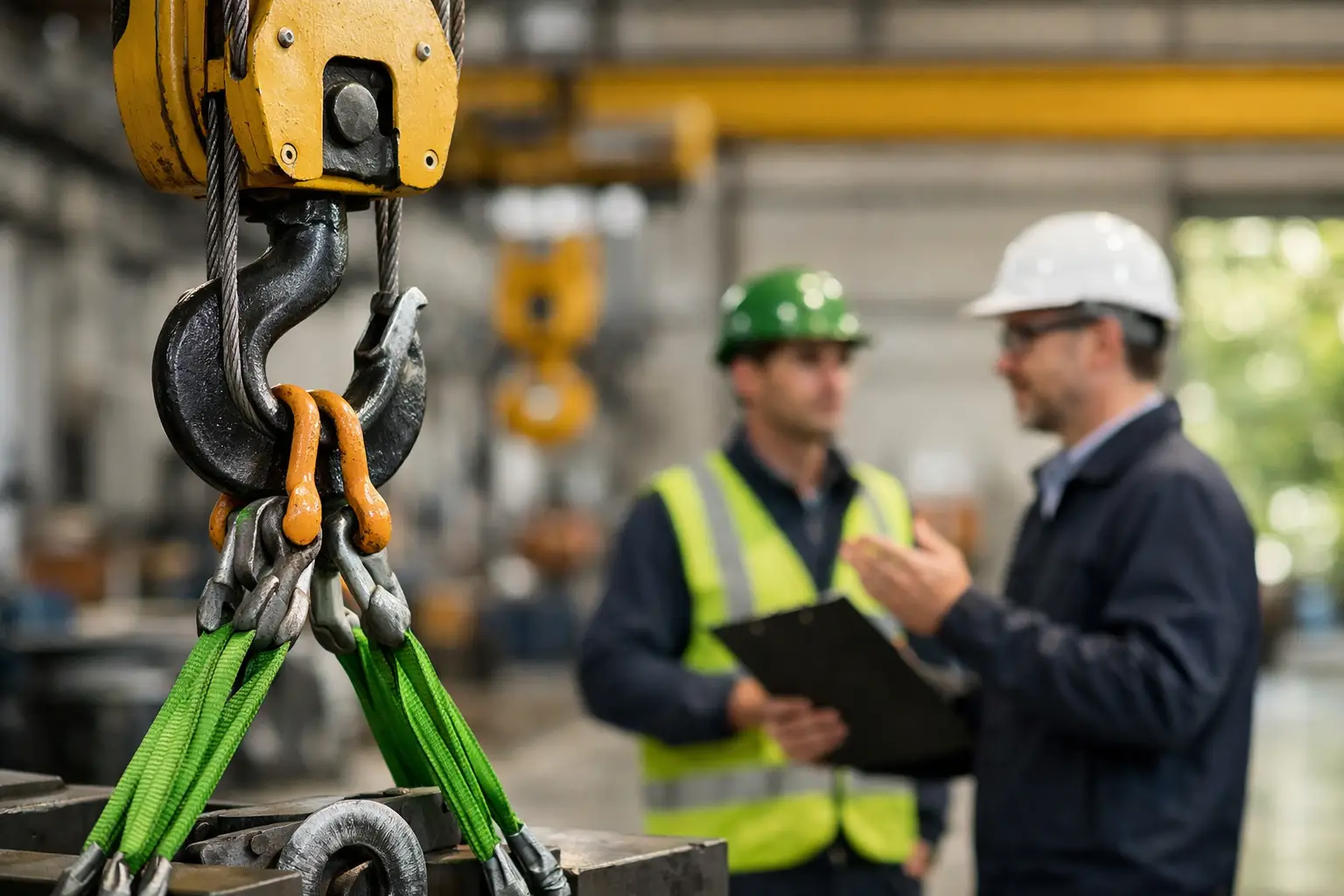
A lifting system can support production for decades, but its environmental impact starts long before the first load is lifted. Steel use, machining, welding, paint processes, packaging, transport, energy consumption, replacement parts, and end-of-life handling all affect the total footprint. Choosing an ISO 14001 lifting equipment manufacturer gives plant and project teams a practical way to assess whether environmental control is built into the supplier’s operations rather than treated as a final-stage claim.
For industrial buyers, this is not simply a procurement preference. Environmental discipline often overlaps with the factors that protect uptime, cost control, and safe operations: documented processes, controlled materials, preventive maintenance, efficient design, and accountability across the equipment lifecycle.
What ISO 14001 Means for Lifting Equipment
ISO 14001 is an international standard for environmental management systems. It does not prescribe one crane design, hoist brand, or manufacturing method. Instead, it requires an organization to identify environmental aspects of its activities, set controls and objectives, monitor performance, meet applicable obligations, and improve its system over time.
In lifting equipment manufacturing, those controls may cover material purchasing, scrap segregation, welding consumables, oils and lubricants, paint and solvent handling, energy use, packaging, and waste generated during fabrication and installation. The value is not that a supplier produces equipment with zero environmental impact. Heavy-duty lifting machinery requires material, power, transport, and ongoing service. The value is that those impacts are actively managed, measured, and reduced where reasonably possible.
This matters because a crane, monorail system, winch, or electric hoist is rarely a short-term purchase. Decisions made at the design and supply stage influence maintenance requirements, power use, spare-parts demand, and serviceability for years.
Why Environmental Management Also Supports Operations
A disciplined environmental management system cannot replace sound mechanical design, load calculations, safety controls, or competent installation. It should, however, reinforce the operating habits that reliable equipment depends on.
For example, a manufacturer that controls material identification and waste streams is more likely to maintain orderly fabrication practices. A company that reviews energy use may recommend appropriately sized motors, controls, and duty ratings rather than overspecifying equipment without regard for how it will operate. A supplier that manages chemicals and maintenance waste should also have clearer procedures for lubricants, oils, cleaning materials, and worn components during service work.
The commercial benefit is often found in the details. Correctly selected equipment can reduce unnecessary power consumption and avoid premature wear. Local access to genuine or suitable spare parts can prevent extended downtime and reduce urgent shipments. Preventive maintenance can identify a worn brake lining, rope, bearing, or electrical component before it develops into a major outage or a safety incident.
Environmental performance and operational performance are not identical, but they are connected by the same question: is the equipment being engineered, installed, and supported with long-term control in mind?
What to Ask an ISO 14001 Lifting Equipment Manufacturer
Procurement teams should look beyond a certificate displayed in a proposal. Ask how environmental management affects the actual project, from initial assessment through installation and service. The answers should be specific to the supplier’s facility, processes, and scope of work.
Ask about design choices and equipment sizing
The right lifting solution depends on load weight, lifting height, travel path, duty cycle, available headroom, building structure, operating environment, and future production requirements. Environmental considerations should be addressed within those engineering constraints, not used to justify a system that lacks capacity or safety margin.
Ask whether the manufacturer evaluates motor sizing, duty classification, control options, material utilization, and maintainability during design. For a frequently used production crane, variable speed control or appropriate hoist selection may improve handling precision and reduce avoidable mechanical stress. For a low-use maintenance hoist, a simpler configuration may be the more economical and sensible choice.
The best solution is not always the one with the lowest initial material use or purchase price. A lighter system that requires frequent replacement, or an undersized hoist that suffers repeated overload-related wear, may create greater lifecycle cost and waste than a properly engineered alternative.
Ask how fabrication and installation are controlled
For custom cranes and material-handling systems, fabrication quality and site installation have a direct effect on equipment lifespan. Inquire about controls for steel offcuts, welding materials, surface preparation, coatings, packaging, and transport. Ask how the installation team handles oils, lubricants, electrical waste, removed components, and general site housekeeping.
These questions are particularly relevant in operating factories and warehouses where installation must be coordinated around production, access restrictions, and safety requirements. A capable supplier should plan lifting work, site logistics, commissioning, and handover without creating unnecessary disruption or unmanaged waste at the customer facility.
Ask about service, maintenance, and parts availability
A lifting system’s environmental performance does not end at commissioning. Service decisions determine whether components are inspected, repaired, adjusted, or replaced at the appropriate time.
Ask whether the supplier provides scheduled inspections, maintenance records, troubleshooting support, and replacement parts for the equipment supplied. Also ask how worn parts, lubricants, ropes, and electrical items are handled when removed during service. Clear maintenance planning helps customers extend useful equipment life while maintaining the safe condition required for lifting operations.
Local parts inventory deserves attention. A replacement component that is available quickly can limit downtime and prevent production teams from relying on unsuitable temporary repairs. It can also reduce the operational disruption associated with emergency sourcing.
Look for Evidence, Not Broad Claims
An ISO 14001 framework is meaningful when it is supported by evidence. During supplier evaluation, request current certification details where applicable, but also assess how the supplier applies environmental controls in daily work. Review its quality and environmental procedures, project documentation, maintenance practices, and approach to continuous improvement.
There is a useful distinction between a manufacturer with an ISO 14001-certified environmental management system and a company that states it works in an environmentally responsible manner. Both may have good intentions, but certification provides independent assurance that the management system has been assessed against a recognized standard. Buyers should confirm the certification scope, location, and validity rather than assuming it covers every product, branch, or subcontracted activity.
For project-specific work, ask how subcontractors are managed. Crane installation, electrical works, transport, structural works, and specialized testing may involve multiple parties. A reliable main contractor should coordinate responsibilities, site rules, waste handling, and documentation across the full project team.
Balance Environmental Requirements With Safety and Fit
Lifting equipment must first be safe, compliant with applicable requirements, and suitable for its intended duty. Environmental objectives should never reduce the factor of safety, compromise structural integrity, or lead to an inadequate maintenance regime.
The practical approach is to specify both operational and environmental expectations early. Share expected operating hours, loads, production changes, building limitations, maintenance access, and site environmental rules during the initial assessment. This enables the manufacturer to recommend a system that meets the actual requirement instead of supplying a standard configuration that may not suit the facility.
Budget remains part of the decision. A lower initial price can be attractive, especially for a capital project with tight approval limits. Yet the comparison should include installation quality, expected service life, availability of spares, maintenance support, energy use where relevant, and the risk of downtime. A transparent supplier will explain these trade-offs clearly rather than promising that one option is best for every application.
A Lifecycle Partnership Matters
Selecting an ISO 14001 lifting equipment manufacturer is most valuable when the supplier remains accountable after delivery. The strongest partnerships begin with a site-based engineering assessment and continue through installation, commissioning, operator guidance, preventive maintenance, spare-parts support, and future modification planning.
At MF Engineering Industries, ISO 14001:2015-compliant manufacturing practices are considered alongside the practical requirements that determine whether a lifting system performs in the field: safe design, fit-for-purpose equipment, responsive service, and parts support. For plant teams, that combination creates a more useful standard of evaluation than environmental claims alone.
A well-chosen lifting partner helps a facility make decisions that remain defensible years after project handover – when production changes, maintenance budgets tighten, and the equipment still needs to lift safely, efficiently, and reliably.