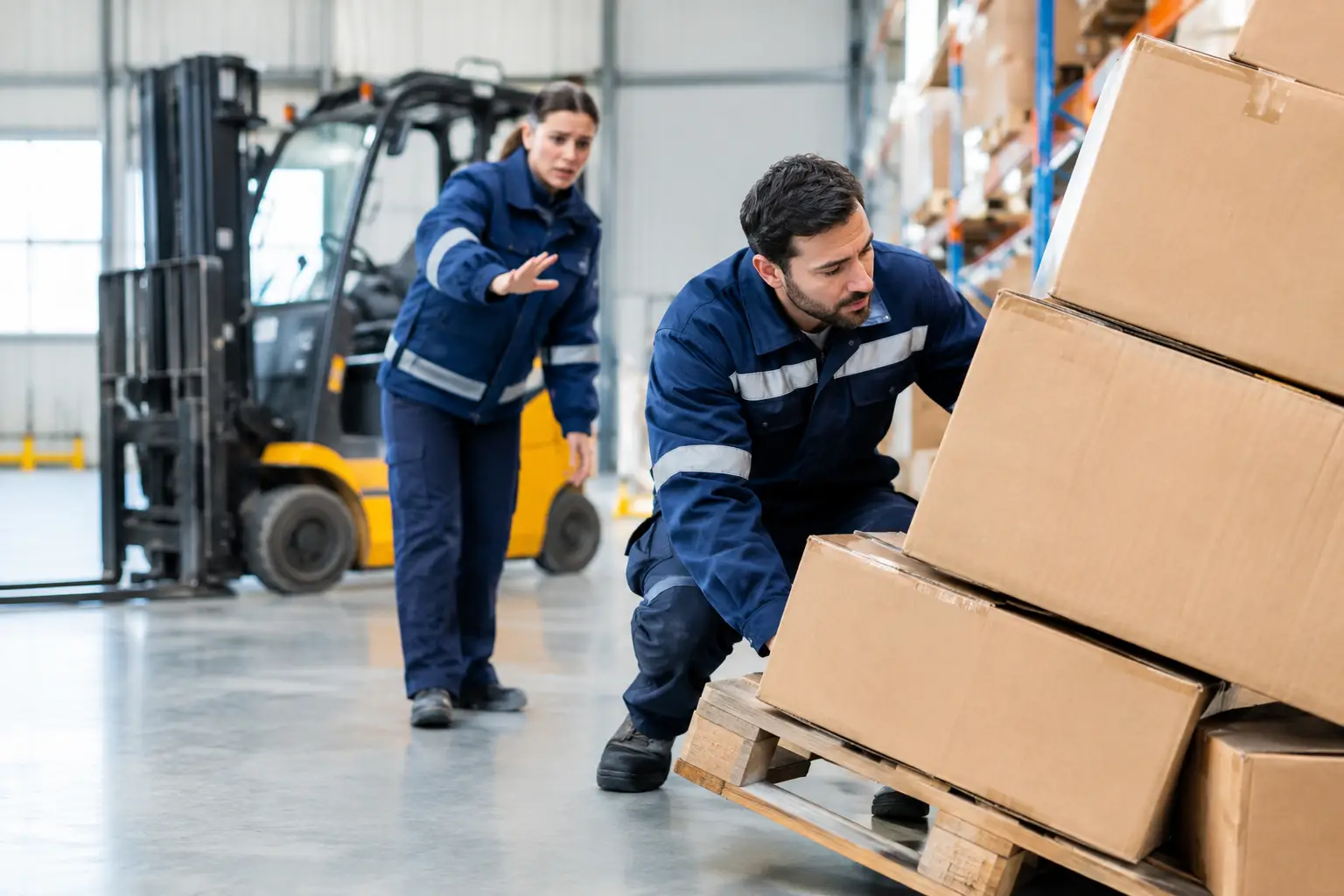
A suspended load that drifts only a few inches can damage product, strike a worker, or stop an entire production line. That is why the top material handling hazards deserve attention before an incident exposes a weak point in the system. For plant, warehouse, and maintenance leaders, safe handling is not separate from productivity. It is the discipline that protects people, equipment availability, and delivery commitments.
Material handling risk rarely comes from one dramatic failure. More often, it develops through ordinary decisions: an unclear lift plan, a worn sling left in service, a load that exceeds the actual capacity at a given radius, or an operator working around an obstruction because the workflow was never properly engineered. Effective controls must address the equipment, the load, the operating environment, and the people using the system.
1. Overloading and Incorrect Load Assessment
Overloading remains one of the most serious hazards because the consequences can involve structural damage, brake failure, dropped loads, and injury. The rated capacity displayed on a crane, hoist, winch, or lifting accessory is not a guess or a target. It is the maximum permitted working load under defined operating conditions.
The risk is not limited to visibly heavy items. Fabricated assemblies, molds, machinery with internal components, and bundled materials are often heavier than expected. Operators may also overlook the weight of spreader beams, lifting frames, hooks, shackles, and rigging. These items are part of the total lifted load.
A sound process starts with verified load weight and a clear understanding of the center of gravity. Where the load is irregular, partially filled, or likely to shift during lifting, the lift should be assessed as a specific handling task rather than treated as a routine pick. If capacity is close to the system limit, an engineered lifting method and suitable equipment selection are usually safer than relying on operator judgment alone.
2. Unstable Loads and Poor Rigging Practices
A load does not have to fall to create a dangerous event. A rotating, swinging, or tilting load can trap a worker against racking, machinery, or building columns. It can also damage sensitive product and create shock loading on the hoist and crane structure.
Poor rigging is a frequent source of instability. Common causes include selecting the wrong sling type, using an unsuitable sling angle, connecting to weak lifting points, or failing to balance the load around its center of gravity. Sling angle deserves particular attention. As sling legs move farther from vertical, tension in each leg increases substantially, reducing the practical capacity of the arrangement.
Rigging should be selected for the load shape, surface condition, weight, and intended travel path. Sharp edges require protection, while smooth cylindrical loads may need positive restraint to prevent rolling. Tag lines can help control a load where appropriate, but they are not a substitute for proper balance or for keeping personnel out of the load path.
3. People Working Under or Too Close to Suspended Loads
No production deadline justifies walking beneath a suspended load. Yet this remains one of the top material handling hazards in active facilities, particularly where pedestrian routes cross crane bays, loading areas, or maintenance zones.
The primary control is simple: establish and enforce an exclusion zone. The operator and designated signal person need a clear view of where the load will travel, while all other personnel must remain clear until the load is landed and stable. This becomes more difficult in congested workshops, where equipment, workstations, and storage have expanded without a corresponding review of traffic flow.
Site layout is therefore a safety control, not merely a space-planning issue. Marked walkways, barriers, defined lifting areas, and planned storage locations reduce the chance that personnel enter a danger zone. Where visibility is restricted, a trained signal person and agreed communication method are essential.
4. Damaged, Worn, or Incorrectly Maintained Equipment
Lifting equipment works under repeated load cycles, and deterioration is not always obvious during normal operation. Wire rope can develop broken wires, crushing, corrosion, or deformation. Hooks can open, twist, or develop cracks. Brakes can lose holding performance, and limit switches can fail to stop travel at the required point.
Deferred maintenance may appear to save money in the short term, but it increases unplanned downtime and raises the likelihood of a more expensive repair. The right maintenance interval depends on equipment type, operating cycles, duty classification, environment, and the nature of the loads handled. A lightly used monorail hoist in a clean facility needs a different service approach than a high-cycle overhead crane in a hot, dusty, or corrosive process area.
Inspections should be documented and acted upon. Operators need a practical pre-use check that covers controls, hooks, ropes or chains, brakes, limit functions, and visible damage. Periodic inspection and preventive maintenance should go further, assessing wear against acceptable limits and confirming that safety devices continue to perform as intended. Access to the right spare parts also matters. A replacement component that is unavailable or unsuitable can extend downtime and encourage unsafe temporary fixes.
5. Inadequate Operator Training and Communication
Even well-designed equipment can be used unsafely when operators have not been trained for the task. Training should cover more than button functions. Operators need to understand rated capacity, load behavior, inspection requirements, travel hazards, emergency response, and when to stop work.
Communication failures are especially dangerous during blind lifts, tandem lifts, and work involving several trades. One person should direct the movement, using understood hand signals or radio procedures. Conflicting instructions can cause sudden starts, unintended travel, or a load being moved into an occupied area.
Competency also needs to be maintained. Facilities change: new products are introduced, storage layouts are rearranged, and teams rotate between departments. Refresher training, toolbox discussions, and review after near misses help keep safe practices connected to actual site conditions rather than an old induction record.
6. Poor Travel Paths, Obstructions, and Housekeeping
A load can be correctly rigged and still be unsafe to move through a poorly planned route. Low clearances, temporary scaffolding, open doors, stacked inventory, poorly positioned machinery, and uneven floors can turn a routine movement into a collision risk.
Before lifting, the operator should confirm the complete path from pickup to set-down point. That includes overhead clearance, side clearance, floor condition, and the position of nearby personnel. The destination matters as much as the lift itself. A load placed on an unstable pallet, overloaded rack, or unsuitable support can become a hazard after the hook is released.
Good housekeeping supports safe material handling. It preserves access to controls and emergency routes, prevents trips around work areas, and gives operators the room needed to position loads accurately. In busy facilities, this requires consistent ownership by operations, maintenance, and supervisors rather than a one-time cleanup campaign.
7. Using Equipment That Does Not Fit the Application
Some hazards begin at the specification stage. A standard hoist or crane may be capable of lifting the weight, yet still be unsuitable for the duty cycle, lifting height, headroom, travel distance, environmental conditions, or precision required by the process.
For example, a facility with limited headroom may need a configuration designed to maximize hook height. A process that handles long loads may require a spreader beam, multiple hoists, or a tailored lifting frame to maintain stability. Outdoor applications may need protection against weather exposure, while hazardous or high-temperature environments demand additional engineering consideration.
Fit-for-purpose design is a practical safety measure because it reduces workarounds. When teams must improvise around a system’s limitations, the chance of overload, side pulling, poor visibility, and awkward manual handling rises. An engineering review should consider the building structure, load data, operating pattern, future expansion, installation constraints, and maintenance access before equipment is selected.
Building Safer Material Handling Into Daily Operations
The most effective safety programs make the correct action the easiest action. They combine suitable lifting equipment, documented inspections, trained operators, clear travel routes, and maintenance support that prevents small defects from becoming failures. They also treat near misses as useful operational data, not as paperwork to close and forget.
MFEI approaches lifting systems as long-term operating assets, with engineering, installation, spare-parts support, and maintenance aligned to the realities of each site. Whether a facility needs to improve an existing crane system or plan a new material-handling installation, the best next step is a site-based review of loads, workflow, and service requirements. Safer lifts begin with conditions that allow people to do the job correctly every time.