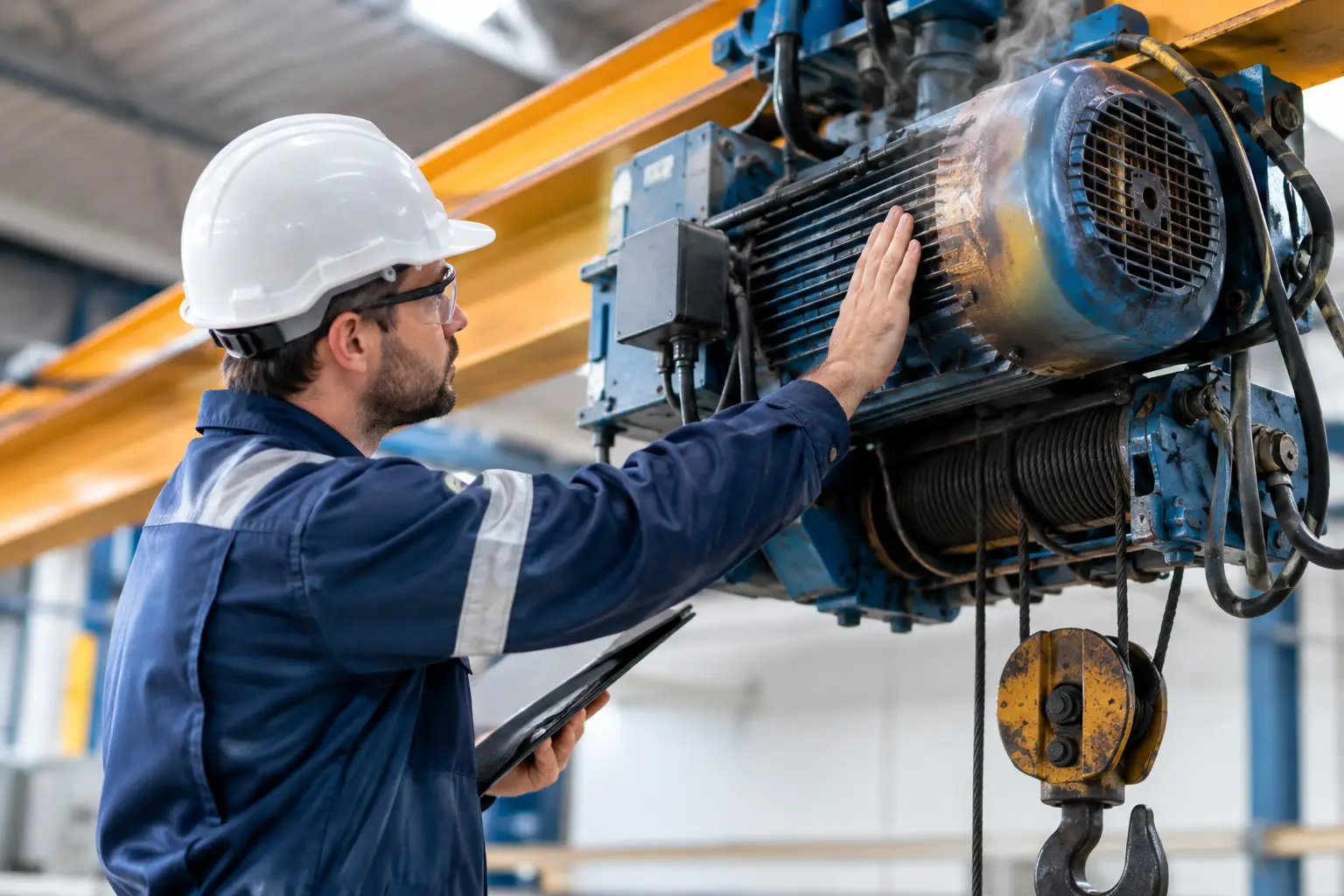
A hoist that runs hot is not simply working hard. It is signaling that electrical energy or mechanical resistance is being converted into excess heat somewhere in the lifting system. Understanding what causes hoist overheating helps maintenance teams act before a thermal trip, damaged motor winding, brake failure, or unplanned production stoppage turns a manageable issue into a costly repair.
The correct response is not always to replace the motor. A proper assessment considers the hoist’s load profile, duty classification, electrical supply, mechanical condition, installation environment, and maintenance history. The same symptom can have different causes in a lightly used warehouse hoist and a heavily cycled production-line crane.
What Causes Hoist Overheating in Industrial Use?
Most hoist overheating falls into two categories: the motor is producing more heat than it should, or the system cannot release normal operating heat effectively. In many cases, both conditions are present. For example, an overloaded hoist draws excessive current while accumulated dust restricts airflow over the motor housing.
Heat should be treated as a condition to investigate, not just an inconvenience to reset. Repeated operation after thermal overload trips can degrade insulation, shorten contactor life, affect brake performance, and reduce the service life of gears, bearings, and wire rope components.
1. Load exceeds the hoist’s rated capacity
Overloading is one of the most direct causes of motor overheating. When a hoist lifts beyond its safe working load, the motor must produce more torque and therefore draws more current. That current creates heat in the motor windings. Even if the hoist completes the lift, it may have operated outside the conditions for which it was designed.
The issue is not always an obvious overload. Actual lifted weight can include lifting beams, hooks, slings, grabs, pallets, fixtures, or product buildup. Side pulling can also increase resistance, even when the suspended load appears to be within the rated capacity. A load should hang vertically under the hoist before lifting begins.
2. Excessive duty cycle or long lifting runs
Every hoist has a duty rating that defines how long and how frequently it can operate without exceeding its thermal limits. A unit intended for intermittent service may overheat when it is repeatedly raised and lowered throughout a shift, particularly if there is insufficient rest time between cycles.
Long lifts are also demanding. A hoist may handle its rated load safely for a short lift but reach an unacceptable temperature during repeated travel over a tall vertical distance. Production changes often create this problem: faster throughput, additional shifts, heavier product batches, or a revised process can push an existing hoist beyond its original operating profile.
This is where fit-for-purpose equipment selection matters. Increasing capacity alone may not solve an overheating issue if the real requirement is a higher-duty hoist, a different lifting speed, or a system designed for more frequent starts and stops.
3. Low voltage, voltage imbalance, or poor electrical connections
An electric hoist motor relies on a stable power supply. Low voltage can cause the motor to draw higher current to develop the torque needed for lifting. Voltage imbalance across a three-phase supply can create uneven heating in the windings and reduce motor efficiency.
Loose terminals, worn contactor contacts, undersized cables, damaged pendant wiring, and corroded connections can all create voltage drop. These faults may be intermittent, making them easy to miss during a basic visual inspection. Symptoms can include sluggish lifting, a humming motor, frequent overload trips, hot electrical panels, or inconsistent performance under load.
Electrical testing should be performed by qualified personnel with the hoist operating under representative load conditions. Measuring supply voltage only when the hoist is idle may not reveal the actual problem.
4. Brake drag and mechanical resistance
A hoist motor can overheat even when the load is well within capacity if mechanical components are creating unnecessary resistance. A brake that does not release fully is a common example. The motor must then lift the load while fighting the partially applied brake, producing heat quickly and wasting energy.
Other sources of resistance include damaged bearings, inadequate gearbox lubrication, worn gear teeth, misalignment, a binding rope guide, or contamination inside the hoist mechanism. On wire-rope hoists, poor rope condition or incorrect reeving can increase friction and load the drive system. On chain hoists, a worn load chain, damaged chain guide, or obstructed chain path may have a similar effect.
Mechanical inspection should look beyond the motor. The motor is often where the heat appears, but not necessarily where the fault started.
5. Poor ventilation and high ambient temperature
Motors need airflow to shed heat. Dust, oil mist, lint, paint residue, and other airborne contaminants can block cooling fins and fan covers. In facilities with high ambient temperatures, a motor begins its work at a higher baseline temperature and has less capacity to cool between lifting cycles.
This risk is especially relevant where hoists operate near furnaces, process equipment, enclosed ceiling spaces, or areas with limited air movement. Outdoor equipment may also be exposed to direct sun, humidity, rain ingress, and airborne contaminants that affect cooling and electrical integrity.
Cleaning should be controlled and suitable for the equipment. Compressed air used carelessly can drive contaminants deeper into windings or electrical enclosures. The right maintenance method depends on the hoist design and the surrounding process environment.
6. Incorrect motor, controls, or replacement parts
A replacement motor, brake coil, contactor, inverter setting, or control component that does not match the hoist’s design can create overheating problems. This may occur after an urgent repair when parts are selected by physical fit rather than electrical rating, insulation class, duty requirement, or manufacturer specification.
Incorrect overload settings are another concern. If set too high, the protection may allow damaging current to continue for too long. If set too low, nuisance trips may encourage operators to bypass a protection device – an unsafe practice that exposes the hoist and personnel to greater risk.
Using suitable spare parts and correctly commissioning repairs protects both equipment reliability and the intended safety functions of the lifting system.
7. Frequent inching, reversing, or stalled operation
Inching a load into position is sometimes necessary, but excessive short starts and stops generate substantial heat. Each start draws a high inrush current, and repeated reversing can place additional stress on the motor, contactors, brake, and gearbox.
Stalling is more serious. If a hoist is unable to move due to an overload, obstruction, brake drag, or jammed mechanism, the motor can heat rapidly. Operators should stop immediately when a hoist struggles, makes unfamiliar noise, or fails to lift smoothly. Continuing to hold the raise button does not solve the underlying resistance.
8. Deferred maintenance and unnoticed wear
Overheating often develops gradually. A small voltage drop, aging bearing, contaminated brake, or deteriorating lubrication condition may not cause an immediate failure. Over time, those conditions combine with daily operating demand until the thermal protection begins to trip.
A planned service program identifies these changes before they affect uptime. It should include load-chain or wire-rope checks, brake inspection and adjustment where applicable, gearbox condition, bearing noise, electrical connection integrity, current draw, limit-switch operation, pendant and control inspection, and verification of overload protection.
Diagnosing an Overheating Hoist Safely
When a hoist overheats, remove it from service if there is a burning smell, smoke, repeated thermal trips, abnormal noise, poor lifting speed, or visible electrical damage. Allow the equipment to cool and prevent unauthorized use while the condition is assessed.
A technician should review the operating pattern as well as the equipment itself. Useful questions include: Has the load changed? Has lift height or production frequency increased? Does the issue occur only with certain loads or at certain times of day? Has electrical work been carried out nearby? Has the hoist recently received replacement parts or repair work?
Current measurements, voltage readings under load, brake operation checks, mechanical inspection, and review of duty cycle provide a clearer diagnosis than replacing components by assumption. For facilities with several hoists, comparing performance between similar units can also help isolate whether the fault is local to one hoist or related to the supply or operating process.
Preventing Heat Damage Before It Stops Production
The most effective preventive measure is to match the hoist to the real application, not only its maximum load. Capacity, lift height, lifting speed, starts per hour, environment, and positioning requirements all influence the appropriate equipment specification.
Once installed, operators should be trained to avoid overloading, side pulling, unnecessary inching, and continued use after a thermal trip. Maintenance teams should track repeat faults rather than treating each reset as an isolated event. A recurring overheating alarm is useful operating data: it may indicate a changing production requirement or a developing mechanical or electrical defect.
For Malaysian facilities managing demanding lifting operations, an experienced service partner can assess whether the practical solution is repair, adjustment, a duty-cycle upgrade, improved ventilation, or a more suitable hoisting configuration. MFEI approaches that decision from the full equipment lifecycle, balancing safe performance, parts availability, downtime risk, and budget.
A hot hoist deserves prompt attention, but it also offers an opportunity to correct the conditions reducing its service life. Investigate the load, power supply, mechanical drag, and operating pattern together, then make the repair or upgrade that keeps lifting work safe and dependable.