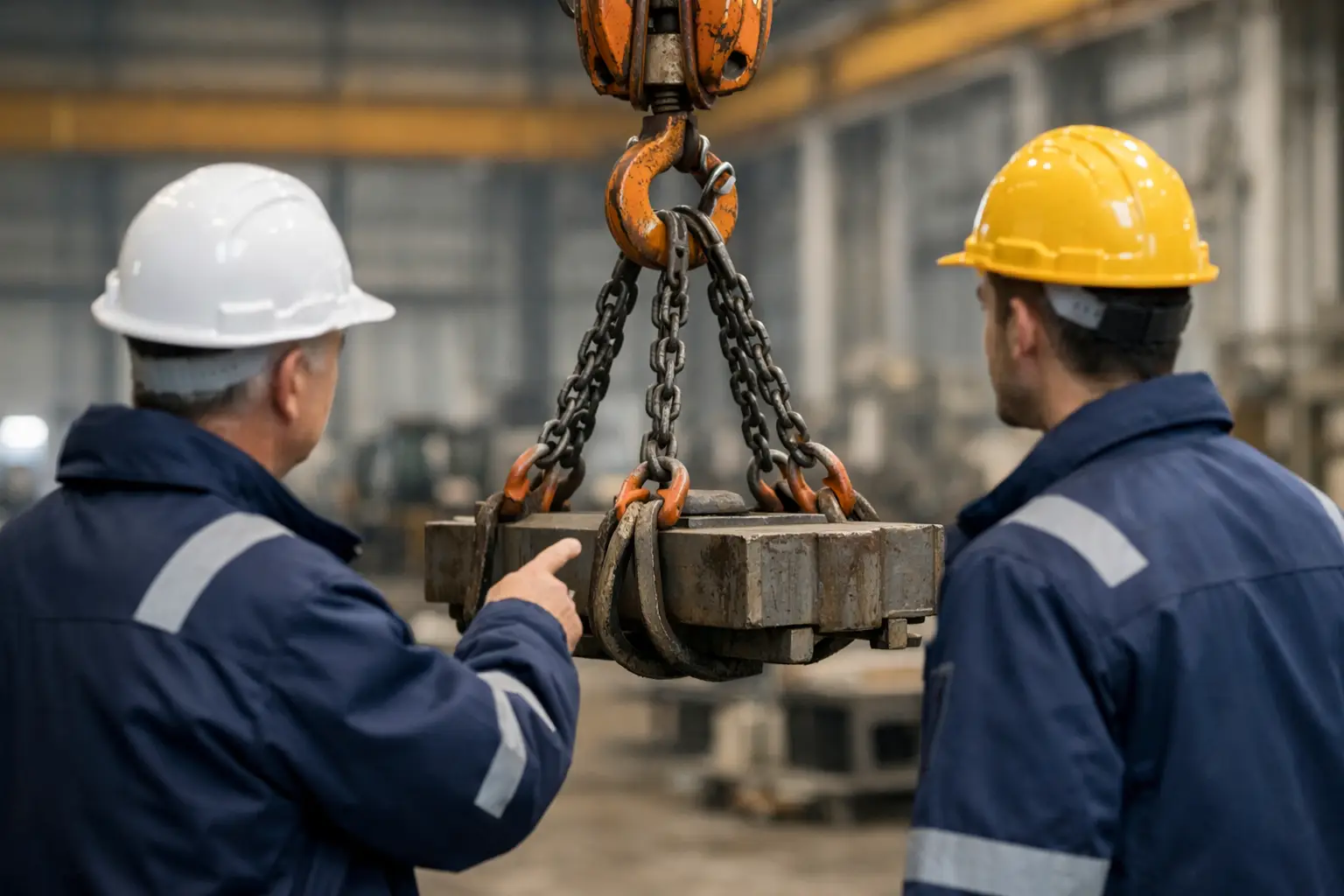
A load is suspended, the production line is waiting, and the only number that matters is the one marked on the equipment. So, what is safe working load? Safe working load, commonly shortened to SWL, is the maximum load a lifting device or component is approved to lift or support under defined operating conditions. It is a working limit, not a target to reach on every lift.
For plant, warehouse, and site teams, SWL is one of the clearest safety controls in a lifting operation. But the number alone does not make a lift safe. The actual load, lifting configuration, condition of the equipment, center of gravity, and operating environment must all remain within the limits for which the system was designed.
What Is Safe Working Load in Lifting Equipment?
SWL is the load limit assigned to equipment such as overhead cranes, hoists, winches, lifting beams, shackles, hooks, chain slings, wire-rope slings, and lifting points. It tells the operator and lifting team the maximum permitted load for normal use when the equipment is correctly selected, installed, inspected, and operated.
A 5-ton hoist, for example, is intended to lift no more than 5 tons under its specified duty and configuration. That does not automatically mean every item connected to it can handle 5 tons. The hook block, sling arrangement, shackle, lifting beam, and load attachment must each have adequate capacity. The usable limit of the complete lift is determined by the lowest-rated item in that load path.
This distinction is practical. A crane may have sufficient rated capacity, yet a damaged sling, undersized shackle, or poorly positioned lifting point can still create an unsafe condition. Safe lifting is a system decision, not a crane-only decision.
SWL, WLL, and rated capacity
In many workplaces, safe working load and working load limit, or WLL, are used interchangeably. Both refer to the maximum permissible working load for properly used equipment. However, the terminology on certificates, product markings, inspection reports, and applicable standards should always take precedence.
For cranes and hoists, the marking may instead be called rated capacity. For a crane with more than one hoist, a variable boom configuration, or a changing operating radius, capacity may vary by position or configuration. Operators must follow the capacity marking, load chart, and manufacturer instructions that apply to the actual lift.
The key point is straightforward: never assume terms from one item of equipment apply identically to another. Confirm the marked capacity and the documented conditions of use.
Safe Working Load Is Not Breaking Strength
A frequent and dangerous misunderstanding is treating breaking strength as usable lifting capacity. Breaking strength is the load at which a component may fail during controlled testing. It is not a permitted operational load.
Manufacturers establish an SWL or WLL by applying a safety factor to the component’s minimum breaking strength, together with design, material, manufacturing, testing, and standards requirements. A simplified expression is:
Safe working load = minimum breaking strength divided by the applicable safety factor
This expression helps explain the principle, but it should not be used by site personnel to create their own lifting rating. Safety factors differ by equipment type, application, standard, and risk profile. A lifting component may also be subject to fatigue, wear, corrosion, heat exposure, shock loading, or side loading that a simple calculation does not capture.
Only the manufacturer, competent engineer, or authorized party should establish or alter a rated lifting capacity. If a label is missing or unreadable, the correct response is not to estimate. Remove the item from service until its identity and rating can be verified.
Why the Marked SWL Can Change in Use
The SWL shown on a component is valid only within stated conditions. Change those conditions and the effective capacity may reduce significantly.
Sling angles are one of the most common examples. As the angle between sling legs becomes wider, the tension in each leg rises. A two-leg sling does not necessarily allow a load equal to twice the single-leg rating. The sling tag or approved load chart must be used for the actual hitch type and angle.
The hitch arrangement also matters. A basket hitch, vertical hitch, and choker hitch can have different ratings for the same sling. A choke configuration may reduce capacity, while a basket arrangement may require consideration of load stability, sling contact points, and the angle at the sling eyes.
Load shape and center of gravity are equally relevant. An unbalanced load can tilt, shift, or impose uneven forces on slings and lifting points. Long loads may need a spreader beam or lifting beam to control sling angle and prevent compression or bending damage. Lifting lugs must be designed for the direction of loading, not merely for the total weight of the item.
Dynamic effects add another layer. Sudden starts, abrupt stopping, snagged loads, impact, side pulling, and lifting a load that is stuck can generate forces well above the static weight. A 2-ton load is not always a 2-ton lifting event. This is why smooth operation, correct rigging, and suitable equipment duty classification matter as much as the marked capacity.
Reading SWL Across the Full Load Path
Before any non-routine lift, identify every component between the crane and the load. This includes the crane or hoist, hook, below-the-hook device, slings, shackles, lifting clamps, lifting lugs, and any temporary connection used to secure the load.
The lifting team should verify four things:
- The actual weight of the load, including fixtures, pallets, lifting beams, and attachments.
- The SWL or rated capacity of every lifting component in the intended configuration.
- The effect of sling angle, hitch method, and load distribution on each component.
- The condition and suitability of the equipment for the environment and planned movement.
The lowest allowable capacity governs the lift. If a 10-ton overhead crane is paired with a 3-ton sling set, the lifting arrangement is limited to the sling set’s applicable capacity, not the crane’s capacity. If the sling angle reduces that sling set’s capacity further, the reduced figure becomes the true limit.
This process also prevents a common operational error: weighing only the product being moved. The total lifted load includes all items suspended from the hook, including spreader beams, lifting frames, grabs, and other accessories.
Inspection Protects the Safe Working Load
An SWL assumes equipment remains in serviceable condition. Wear and damage can reduce the safety margin that was present when the item was manufactured and tested.
Routine pre-use checks should look for visible defects such as stretched chain links, hook throat opening, damaged safety latches, wire-rope distortion, broken wires, kinks, crushed sections, corrosion, deformed shackles, worn pins, damaged sling eyes, and illegible identification tags. For cranes and hoists, operators should also check limit switches, brakes, controls, hooks, rope condition, abnormal noise, and signs of oil leakage or mechanical damage.
Formal periodic inspection and preventive maintenance provide a deeper assessment. The right interval depends on equipment type, usage intensity, environment, manufacturer guidance, and applicable legal requirements. A hoist operating multiple shifts in a dusty, humid, or corrosive facility will generally need more attention than one used occasionally in a controlled workshop.
Inspection findings must lead to action. Equipment with a defect affecting its safe operation should be clearly isolated from use, assessed by a competent person, and repaired or replaced before it returns to service. Continuing to use equipment because the lift is urgent is not cost discipline. It is an avoidable exposure to injury, damage, and extended downtime.
When a Standard Rating Is Not Enough
Some lifting requirements cannot be safely addressed by selecting a standard catalog item. Odd-shaped machinery, long fabricated sections, confined lifting zones, low headroom, high-frequency production handling, and loads with uncertain centers of gravity may require an engineered solution.
This is where the relationship between SWL and system design becomes especially valuable. A fit-for-purpose lifting beam, custom jib crane, monorail system, or modified hoisting arrangement can improve control and reduce manual handling risk. However, custom equipment must be properly designed, fabricated, tested, marked, installed, and supported with suitable documentation.
It also depends on the wider operation. Increasing crane capacity may not solve a handling issue if the building structure, runway, electrical supply, floor space, or loading point cannot support the change. A practical engineering review considers the entire material-handling process, along with budget, access for maintenance, spare-parts availability, and expected equipment life.
Building Better SWL Discipline on Site
Good lifting discipline begins before the hook is connected. Keep equipment markings visible, maintain an equipment register, and ensure operators can recognize when a planned lift differs from routine work. Weight information should be reliable, not guessed from appearance or previous jobs.
Train operators and riggers to stop when capacity, configuration, or load stability is uncertain. They should understand that capacity labels are conditional and that side pulling, shock loading, and unauthorized modification can invalidate normal operating assumptions. Supervisors can reinforce this by making lift planning part of the work process rather than an afterthought.
For complex, heavy, unusual, or high-consequence lifts, a documented lifting plan and competent technical review are appropriate. The plan should define the load, weight, center of gravity, lifting points, selected equipment, capacities, travel path, exclusion area, communication method, and responsibilities. This level of preparation supports safer execution and prevents expensive disruption when a lift does not go as expected.
Safe working load is not just a number stamped on a hook or printed on a tag. It is a limit that relies on sound engineering, correct selection, careful operation, and consistent maintenance. Treat it as a control for the whole lifting system, and it becomes a practical safeguard for people, equipment, and production continuity.
One response to “What Is Safe Working Load? A Practical Guide”
[…] required capacity should account for the maximum working load, the route of travel, friction, incline, reeving arrangement, and a suitable safety margin. For […]