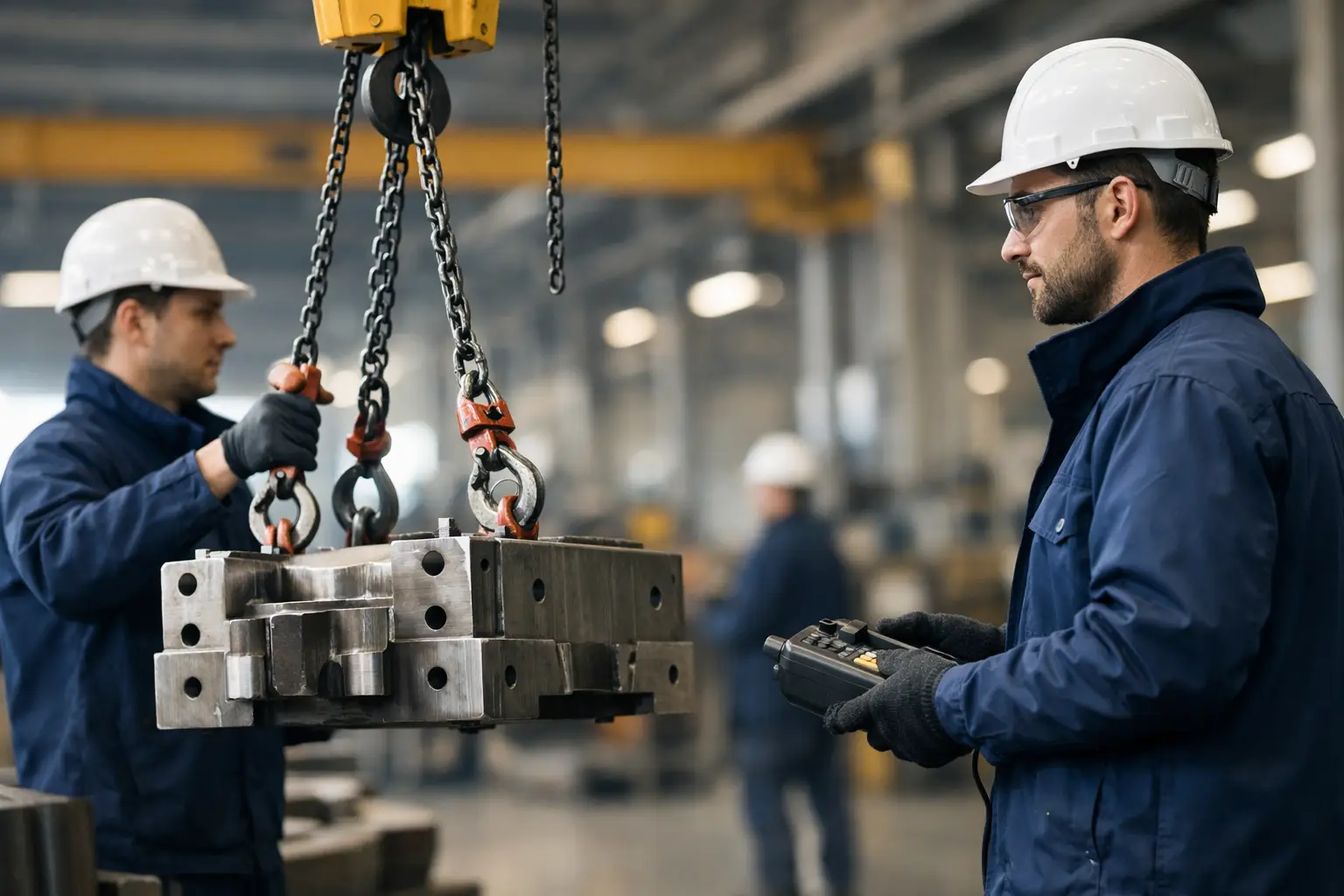
A lifting system rarely fails because the facility chose the wrong color, supplier brochure, or control pendant. Problems usually begin earlier: the equipment was sized only for maximum load, the building constraints were not fully assessed, or maintenance was treated as a future concern. The right lifting equipment must suit the load, the movement required, the work environment, and the people who depend on it every shift.
For plant managers, project engineers, and procurement teams, that means looking beyond the rated capacity on a quotation. A crane, hoist, winch, or material-handling system is a long-term operational asset. Its value is measured by safe handling, consistent availability, efficient material flow, and serviceability over its working life.
Start With the Actual Lifting Requirement
The first question is not simply, “How heavy is the load?” It is, “What must the system safely lift, where must it move, how often will it operate, and what happens around it?” A 5-ton load lifted occasionally in a maintenance bay needs a different solution from the same load handled repeatedly on a production line.
A proper assessment considers the maximum working load, but it also examines the load’s dimensions, center of gravity, lifting points, and stability. Long fabricated sections, bundled steel, molds, machinery components, and irregular assemblies can create handling challenges even when their weight is within the hoist rating. The selected hook, lifting beam, spreader arrangement, and sling method must keep the load controlled throughout the lift.
Duty cycle matters just as much. Equipment used for a few lifts each week can be configured differently from equipment completing frequent lifting and traversing cycles during every shift. Higher operating frequency increases wear on hoist components, brakes, wire rope or chain, wheels, electrical systems, and runway elements. Selecting a system designed for its real service class helps prevent premature component failure and unnecessary downtime.
Before engineering begins, facility teams should be able to define four practical factors:
- What is the heaviest load, including lifting attachments?
- What travel path and final positioning accuracy are required?
- How many lifts, operating hours, and shifts are expected?
- What site conditions could affect installation, operation, or maintenance?
Clear answers to these questions allow an engineering partner to recommend fit-for-purpose equipment rather than applying a standard solution to a nonstandard operation.
Match Lifting Equipment to the Work Area
The work area often determines the system as much as the load does. Headroom, building column spacing, roof structure, floor loading, access routes, and existing machinery all affect the feasible design. A technically capable lifting system that interferes with production flow or cannot be serviced safely is not a practical investment.
Overhead cranes are often appropriate where loads must move across a defined production area, warehouse bay, or workshop. They can provide broad coverage without occupying valuable floor space. However, the building structure and crane runway need proper evaluation. Depending on the site, this may involve using an existing support structure, reinforcing it, or supplying a freestanding gantry structure.
Jib cranes are useful for focused lifting zones such as machine loading stations, assembly cells, and maintenance areas. They offer responsive local coverage, but their reach is limited to the jib radius. Monorail systems can be efficient when loads follow a consistent linear route, such as moving materials between defined process stations. Electric chain hoists, wire rope hoists, and winches each have their place, depending on capacity, lift height, speed, duty requirements, and the nature of the load.
There is no universal “best” configuration. A lower-cost system may be suitable for intermittent handling, while a heavier-duty arrangement may deliver better value where production depends on repeated lifts. The correct decision balances immediate capital cost with operating reliability, installation constraints, and the cost of disruption if equipment is unavailable.
Design for Safe, Controlled Movement
Lifting safety is not achieved by capacity alone. A system must also provide controlled movement and clear operating conditions. Excessive load swing, poor visibility, limited hook approach, congested aisles, or an unsuitable control location can increase risk even when the equipment is mechanically sound.
Engineering should consider hoisting speed, trolley travel speed, bridge travel speed, control type, and the need for variable-speed operation. Faster movement may improve cycle time, but only if the load can be positioned accurately and operators have sufficient clearance. In many applications, smooth acceleration and deceleration are more valuable than maximum speed because they reduce load swing and improve placement control.
Safety features should be selected according to the application. These may include upper and lower travel limits, overload protection, emergency stop functions, anti-collision measures, warning devices, and appropriately designed end stops. For specialized handling, additional features such as radio controls, load indicators, synchronized lifting arrangements, or custom lifting attachments may be justified.
Safe operation also depends on the surrounding process. Marked travel paths, exclusion zones, operator training, inspection procedures, and clear communication between lifting personnel and nearby teams all contribute to safer material handling. Equipment design and site discipline must work together.
Plan Installation Before Equipment Arrives
Installation should not be treated as a final delivery activity. It is an engineering stage that can affect project schedule, cost, and operational disruption. Site access for transport vehicles, lifting arrangements for erection, shutdown windows, electrical supply, and structural preparation should be confirmed well before installation begins.
For an operating plant, the installation approach may need to minimize interference with production. This can involve phased work, controlled shutdown periods, after-hours installation, or careful coordination with other contractors. A detailed site survey helps identify issues early, such as low access points, restricted crane erection space, buried services, unsuitable foundations, or conflicts with building services.
Commissioning is equally important. The system should be inspected, tested, and handed over with operating guidance before being placed into normal service. Documentation, inspection records, equipment specifications, and maintenance recommendations should be organized so the facility team can manage the asset confidently from day one.
Serviceability Is Part of the Equipment Decision
The most expensive lifting equipment is often the unit that stops production and cannot be restored quickly. When evaluating a system, ask how accessible its wear components are, whether spare parts can be obtained locally, and who will perform routine service and emergency repairs.
Planned maintenance helps identify issues before they become failures. Brake wear, hoist gearbox condition, wire rope or load chain condition, hook wear, electrical contacts, pendant controls, limit switches, wheels, and lubrication points all require regular attention. The service interval should reflect the operating environment and duty cycle, not just a calendar date.
Harsh environments need additional consideration. Dust, heat, moisture, corrosive exposure, outdoor use, and heavy production contamination can affect electrical enclosures, lubrication, rope life, corrosion protection, and component selection. A system that appears economical at purchase may have higher maintenance demands if it is not specified for the environment.
MFEI approaches this as a full-lifecycle requirement: equipment selection, installation, spare-parts availability, and maintenance support should be considered as one connected plan. That approach gives operational teams a clearer path for protecting uptime and managing costs over time.
Control Lifecycle Cost, Not Just Purchase Price
Budget discipline is necessary, but the lowest initial quotation is not always the lowest-cost decision. Lifecycle cost includes installation work, operator productivity, energy use, inspections, planned maintenance, replacement parts, repair response, and the production impact of downtime.
For example, a higher-duty hoist may cost more initially but require fewer interruptions in a high-use operation. A custom runway arrangement may involve additional project cost but remove a material-flow bottleneck that limits production every day. Conversely, overspecifying equipment for light, occasional use can tie up capital without providing a meaningful operational benefit.
The best commercial decision is based on realistic operating data and clear priorities. If uptime is critical, prioritize service access, component quality, local parts support, and an appropriate maintenance plan. If the application is intermittent and budget-sensitive, focus on a safe, compliant configuration that meets the required duty without unnecessary complexity.
Choose a Partner Who Can Support the Full System
Lifting projects involve more than supplying a hoist or crane. They require an understanding of loads, structures, controls, installation conditions, operator use, inspection requirements, and ongoing service. A supplier that can assess the site, engineer the solution, install it properly, and support it after commissioning reduces the risk of gaps between project stages.
Ask practical questions before appointing a provider. Can they assess building and runway requirements? Can they adapt the design to the actual layout? Do they have experienced technical personnel for installation and troubleshooting? Are spare parts and maintenance support available when needed? Their answers will often reveal more than a product specification sheet.
The right lifting equipment should become a dependable part of the operation, not a recurring source of workarounds. When it is engineered around the real load, workflow, site constraints, and maintenance needs, every lift has a better chance of being safer, more predictable, and easier to manage.