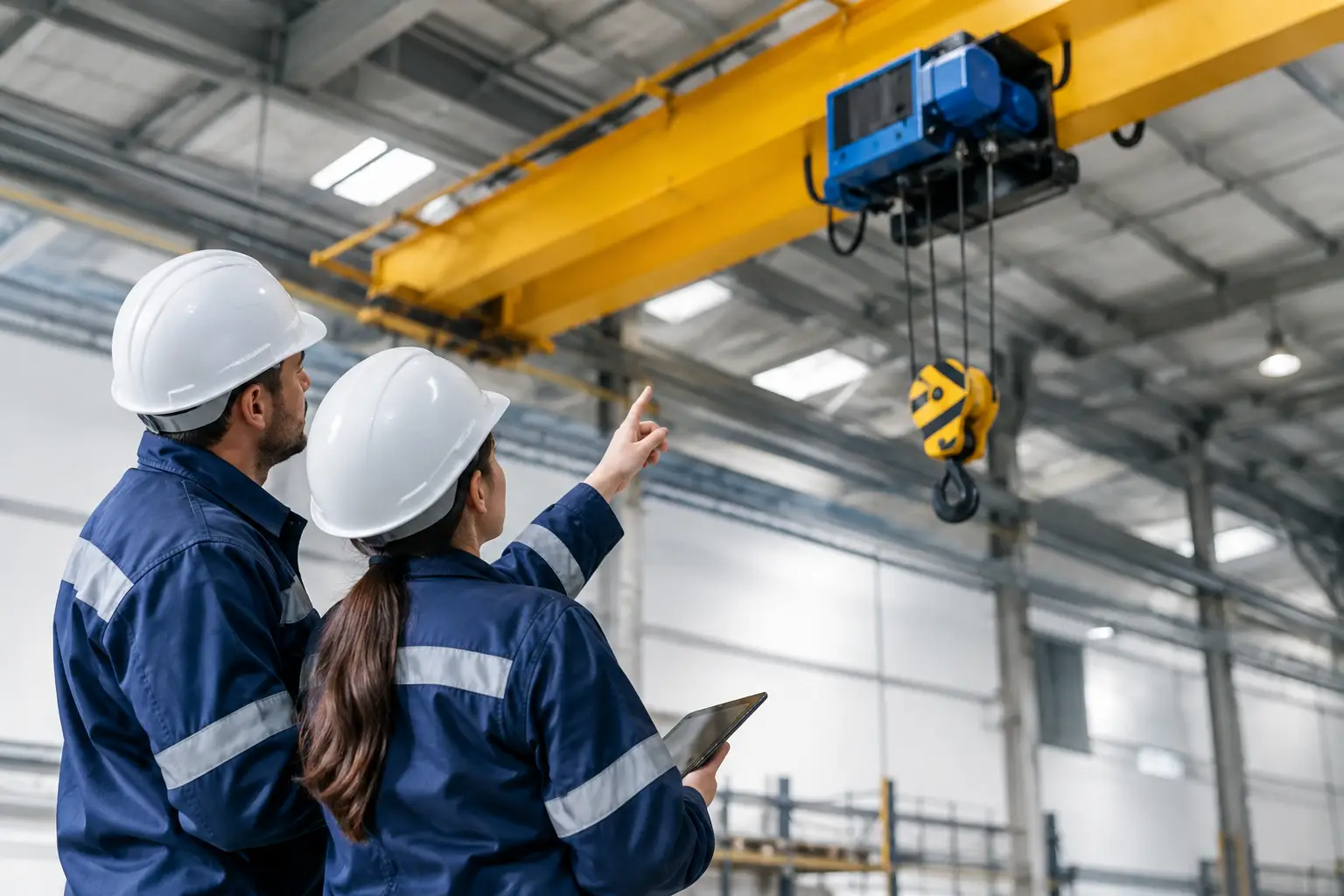
A hoist that still lifts a load is not necessarily meeting the needs of a working warehouse. Slow cycles, frequent fault resets, difficult pendant control, unavailable spare parts, or a capacity limit that forces improvised handling are all signs that a warehouse hoist upgrade deserves serious consideration. The right decision is not always a complete replacement. In many facilities, a targeted upgrade can improve safety and availability while protecting the value of the existing crane structure and runway.
For warehouse and operations managers, the question is practical: will the investment reduce disruption, improve handling, and support the facility’s next stage of work? The answer depends on the condition of the equipment, the loads being moved, the duty cycle, and whether the current system can be adapted without introducing new operational constraints.
Start With the Work, Not the Hoist
An upgrade should begin with an assessment of the actual lifting task. Nameplate capacity is only one part of the picture. A hoist may be rated for the heaviest load in the warehouse but still be poorly suited to the frequency, travel distance, lifting height, or level of positioning accuracy required on the floor.
Review what is being lifted, how often it is moved, where operators need to place it, and whether loads are balanced and predictable. A hoist used occasionally to service machinery has very different requirements from one supporting repeated pallet, mold, fabrication, or production handling throughout a shift. The latter may need a higher duty classification, faster but controlled lifting speeds, or more reliable control components.
It is also worth looking at changes that happened gradually. New products may be heavier. Storage layouts may have changed. A warehouse may now use a larger range of load sizes than it did when the original lifting system was installed. These changes can turn an adequate hoist into an operational bottleneck even before a major failure occurs.
Signs a Warehouse Hoist Upgrade Is Due
Breakdowns are an obvious warning, but they are not the only reason to act. Planned upgrades are generally easier to schedule and control than emergency replacements after an unplanned stoppage.
Repeated electrical faults, worn wire rope or chain components, brake performance concerns, excessive noise, erratic travel, and recurring overload trips all require technical investigation. Some issues can be resolved through maintenance. Others indicate that key components have reached the end of their economical service life.
Parts availability is another decisive factor. When a failed contactor, brake assembly, gearbox component, or control device has a long lead time, a small fault can keep a critical handling point out of service for weeks. An upgrade that uses supportable components and has a clear spare-parts strategy can reduce this exposure.
Operational workarounds should also be treated as a warning sign. If employees regularly wait for a forklift because the hoist cannot reach a required position, use additional manual handling to compensate for poor control, or avoid certain lifts because the equipment is unreliable, the warehouse is carrying hidden costs. Those costs include lost time, unnecessary handling, and increased risk to people and materials.
Upgrade, Modernize, or Replace?
A full replacement is not automatically the best answer. The condition of the bridge, runway, supporting structure, electrification system, and end carriages should be assessed before deciding the scope of work. If these elements remain suitable for the intended loads and service duty, modernization of the hoist and controls may deliver the most cost-effective result.
A typical modernization may include a new hoist unit, upgraded controls, a variable-frequency drive, new pendant or radio control, improved limit switches, and renewed power supply components. Variable-speed lifting and travel can be particularly valuable where operators must position materials precisely. It can reduce load swing, minimize impact during placement, and give operators better control around machinery, racking, or tight work areas.
However, there are limits to what an upgrade can solve. If the runway alignment is poor, the structure has insufficient capacity, headroom is inadequate, or the required lifting capacity has increased substantially, the project may need a broader engineering solution. Installing a higher-capacity hoist without confirming the capacity of the full lifting system is not a safe or responsible approach.
The most suitable option should be based on an engineering review of the complete load path, from the hook and hoist to the bridge, runway, supports, and building structure where applicable. Budget matters, but so does avoiding a partial upgrade that creates a new constraint elsewhere in the system.
Design Around Safety and Daily Operation
A warehouse hoist is part of a working environment, not an isolated machine. Its controls, travel path, hook approach, lifting height, and maintenance access all affect how safely and efficiently people can use it.
During project planning, consider the practical operating conditions. Can the operator maintain a safe view of the load? Is there sufficient clearance from racking, machinery, and pedestrian routes? Does the hook reach the required pickup and set-down points without side pulling? Are upper and lower limits correctly configured for the available height? These details influence the quality of the final installation as much as the hoist’s capacity rating.
Safety devices should match the application. Depending on the system, this may include overload protection, emergency stop functions, travel limits, phase protection, warning devices, and controlled speed functions. They must be selected, installed, and tested as part of a coordinated system, not added as disconnected accessories.
Operator usability also has a direct safety benefit. A clear pendant layout, responsive controls, sensible cable management, and predictable hoist behavior make it easier for personnel to perform lifts correctly. Training remains necessary, especially where upgraded controls or new operating modes are introduced.
Plan Installation Around Downtime
For a busy warehouse, installation planning is often as important as equipment selection. A technically sound upgrade can still disrupt operations if shutdown windows, access routes, lifting arrangements, and commissioning requirements are not addressed early.
A site survey should confirm dimensions, headroom, power supply, runway condition, access for installation equipment, and any constraints created by production or storage activities. It should also identify whether work can be completed during a planned shutdown, in phases, or during lower-volume operating periods.
Clear responsibilities reduce risk during the changeover. The project scope should specify what equipment will be isolated, who will prepare the work area, how existing loads or stock will be protected, and what testing is required before the system returns to service. Functional testing should cover lifting, lowering, brake response, limit devices, travel movement, controls, and load testing as appropriate for the installation.
Documentation should not be treated as an afterthought. Updated equipment details, operating instructions, maintenance requirements, test records, and parts information give the maintenance team a reliable basis for future service.
Build Serviceability Into the Specification
The long-term value of a warehouse hoist upgrade is determined after installation. A lower purchase price can become expensive if replacement parts are difficult to obtain, service technicians cannot access components safely, or maintenance requires excessive downtime.
Specify equipment with practical access to brakes, controls, wire rope or chain components, and lubrication points. Ask how common wear parts will be supported and whether critical spares can be identified for on-site holding. For facilities where the hoist is essential to daily output, keeping selected components available can be more economical than accepting a prolonged outage.
Preventive maintenance should be aligned with actual use rather than treated as a calendar exercise alone. High-cycle equipment, dusty environments, outdoor exposure, corrosive conditions, and frequent heavy lifting all affect inspection intervals and component wear. Routine servicing can identify brake wear, electrical degradation, rope damage, loose connections, and alignment issues before they become disruptive failures.
MFEI approaches these projects as lifecycle lifting solutions, combining site assessment, fit-for-purpose engineering, installation, spare-parts support, and ongoing maintenance. That continuity is valuable when a warehouse needs an upgrade that meets immediate operational needs without losing sight of future service requirements.
Make the Business Case in Operational Terms
A sound proposal should do more than compare equipment prices. It should account for the cost of current downtime, delays in material movement, maintenance callouts, parts lead times, safety exposure, and the labor required by workarounds.
Not every improvement needs the same payback period. A high-use hoist at a critical dispatch or production point may justify a larger investment because each hour of downtime affects the entire operation. A low-use maintenance hoist may be better served by focused repairs and a disciplined inspection plan. The goal is fit-for-purpose performance, not unnecessary specification.
The best time to discuss an upgrade is when the existing system still gives the team room to plan. A structured assessment of loads, duty, equipment condition, site constraints, and service needs turns a potential failure point into a controlled improvement project – one that helps the warehouse move material with greater confidence every day.