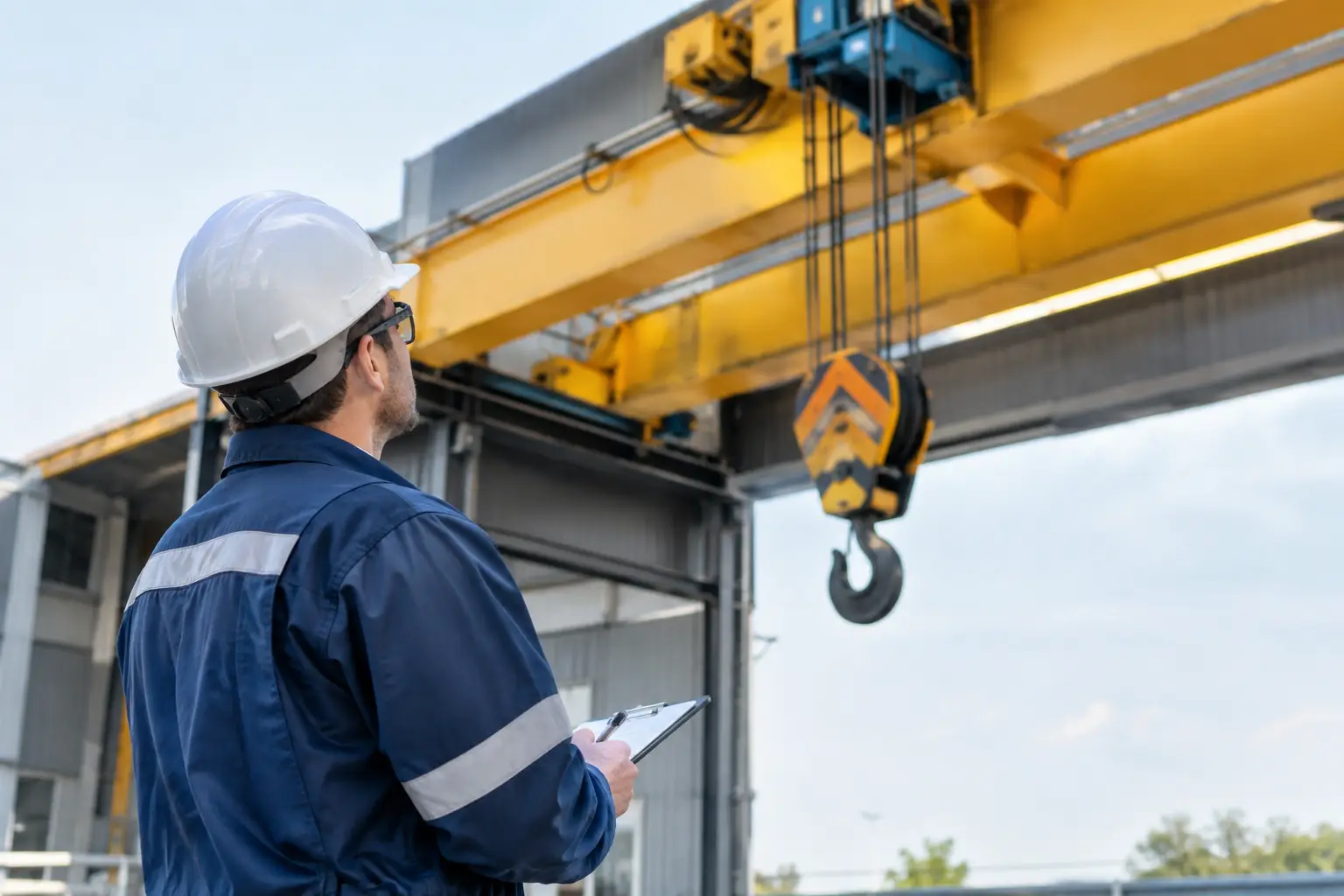
A hoist that appears economical on a quotation can become the more expensive option once it is undersized, difficult to service, or unable to match the work cycle on the floor. Understanding what affects hoist pricing helps plant, maintenance, and procurement teams compare proposals on operating value rather than purchase price alone.
The right hoist is not simply the one with the highest stated capacity. It must suit the load, lifting frequency, travel arrangement, environment, controls, and service expectations of the facility. Those requirements determine the equipment specification, engineering work, installation scope, and long-term cost of ownership.
What affects hoist pricing at the equipment level
1. Rated capacity and lifting height
Capacity is a primary cost driver because it influences the hoist motor, gearbox, brake, rope or chain, hook block, frame, and supporting structure. A 5-ton hoist is not priced like a 1-ton unit with a larger label. Its internal components and safety margins must be engineered for substantially higher loads.
Lifting height also matters. More lift generally requires a longer wire rope or lift chain, a larger rope drum or chain container, and appropriate reeving. For wire rope hoists, the reeving arrangement can affect lifting speed, hook travel, and the physical headroom required above the load. A higher hook path may also add cable-management requirements.
The practical question is not only, “What is the heaviest item?” Consider the actual lifted load, including fixtures, slings, spreader beams, lifting beams, and other below-the-hook devices. Specifying too close to the maximum expected load leaves little operating flexibility. Specifying far above it can add avoidable capital cost and may require a larger runway or supporting steelwork.
2. Duty class and operating frequency
Two hoists with the same capacity can have very different prices because they are designed for different duty cycles. A unit used for occasional maintenance lifts does not need the same motor thermal capacity, brake life, gearbox design, or component durability as one supporting repetitive production handling throughout multiple shifts.
Duty classification considers factors such as lifts per hour, average load, travel distance, operating time, and expected service life. Higher-duty equipment is usually more expensive initially, but it is often the correct commercial choice for a production-critical application. A lightly rated hoist used beyond its intended duty may experience accelerated wear, overheating, unplanned maintenance, and downtime.
An accurate duty assessment should be based on actual work patterns, not an estimate made only from maximum load. Maintenance teams and operators often provide the most useful information here because they understand how often equipment is called upon during peak periods.
3. Hoist type and lifting configuration
Electric wire rope hoists, electric chain hoists, manual hoists, and air-powered hoists each suit different applications. Their pricing reflects the mechanism, capacity range, speed, control requirements, environment, and expected operating duty.
Wire rope hoists are commonly selected where higher capacities, longer lifts, smooth handling, or intensive use are required. Chain hoists can be a practical and cost-effective choice for lower capacities, workstation lifting, and compact installations. However, the best option depends on application conditions, not a simple comparison of purchase price.
Configuration also changes the scope. A fixed hoist, monorail hoist, push trolley, geared trolley, electric traveling trolley, or hoist integrated into an overhead crane each requires different equipment and engineering. A hoist may be only one part of a larger lifting system, with the beam, runway, electrification, and controls accounting for a meaningful share of the project cost.
4. Lift and travel speeds
Higher lifting speeds can improve throughput, but they usually require more powerful motors, suitable braking arrangements, and control systems designed to manage load movement safely. Dual-speed or variable-speed lifting is often selected where careful positioning is essential, such as mold handling, machinery installation, or lifting delicate fabricated components.
Travel speeds have similar trade-offs. Fast trolley or crane travel may shorten handling time over long distances, but uncontrolled acceleration and deceleration can cause load swing. Variable-frequency drives, soft start features, and coordinated controls can improve positioning and reduce impact loading. These additions increase the initial price, yet they may protect products, reduce operator fatigue, and support safer material flow.
Site conditions that change the project cost
5. Available headroom and structural constraints
Site geometry is one of the most overlooked pricing factors. Low ceilings, existing services, roof trusses, restricted access, or limited hook approach may require a low-headroom hoist design, altered beam arrangement, or customized crane configuration.
The supporting structure must also be suitable for the imposed loads. This includes the lifted load, hoist and trolley weight, crane self-weight where applicable, dynamic effects, and runway reactions. If an existing building requires reinforcement, new columns, runway beams, or foundations, those works can materially affect the total project budget.
A site survey before final specification avoids a common problem: selecting equipment that fits the capacity requirement but cannot deliver the required hook height or travel coverage once installed. Engineering input early in the process is typically less costly than redesigning equipment or building works later.
6. Electrical supply and control method
The electrical system affects both equipment selection and installation work. Voltage, phase, available power, cable routing, isolators, festoon systems, conductor bars, and control pendant locations all need to be considered.
Basic pendant control may be suitable for straightforward lifts. Radio remote control, independent motions, variable-speed drives, load displays, anti-collision features, and interlocks may be worthwhile where operators need better visibility or where lifting takes place near equipment, personnel, or multiple cranes.
Controls should be specified around the operating risk and process need. Adding every available feature is not automatically good engineering. The aim is a clear, safe, maintainable control arrangement that supports the way the facility actually works.
7. Environmental and safety requirements
A clean indoor workshop places different demands on equipment than a humid, dusty, corrosive, high-temperature, outdoor, or hazardous-area location. Protective coatings, weather covers, special enclosures, stainless or corrosion-resistant components, upgraded electrics, and environmental protection ratings can all affect pricing.
Safety requirements may include upper and lower limit switches, overload protection, emergency stops, phase protection, slack-rope protection, warning devices, and restricted operating zones. The required level depends on the hoist type, application, risk assessment, and applicable standards or site rules.
These features should not be treated as quotation extras with no operational value. A properly specified safety system helps protect people, loads, production equipment, and the lifting asset itself. The key is selecting safeguards that address genuine site hazards rather than applying a generic specification.
The costs beyond the hoist itself
8. Installation, commissioning, and lifecycle support
A hoist price can refer only to the equipment, or it can include delivery, installation, load testing, commissioning, documentation, operator familiarization, and handover. Procurement teams should confirm the scope line by line before comparing quotations.
Installation cost depends on access, working height, shutdown windows, lifting arrangements for the installation itself, electrical works, and whether work must be completed around active production. A compact facility with limited access may require more planning than a new building with clear installation routes.
After handover, maintenance access and spare-parts availability influence ownership cost. Components that are difficult to obtain or service can turn a minor fault into a prolonged stoppage. Preventive inspections, lubrication, brake checks, rope or chain examination, electrical testing, and timely replacement of wear parts help preserve safe operation and extend equipment life.
For facilities in Malaysia, local technical support and stocked spare parts can be especially valuable when uptime is critical. MFEI approaches pricing as part of a complete lifting solution, considering the application, site constraints, installation requirements, and long-term service needs rather than supplying equipment in isolation.
How to request a more useful hoist quotation
A detailed inquiry produces a more reliable budget. Provide the maximum working load, lifting height, required speeds, expected lifts per hour, duty pattern, load dimensions, and any special lifting attachment. Include site drawings or photographs where possible, along with beam sizes, available headroom, electrical supply, travel length, and environmental conditions.
It also helps to explain the operational consequence of downtime. A hoist used for occasional maintenance may justify a different specification and service plan than one that feeds a production line every shift. This context allows the supplier to balance capital cost, reliability, and maintainability appropriately.
The lowest initial figure can be suitable when the application is simple and usage is light. In demanding applications, however, a price that includes the correct duty rating, engineered installation, safety provisions, and accessible after-sales support can offer better value over the equipment’s working life.
A productive next step is to walk the intended lifting path with an engineer before approving the specification. The most useful hoist is the one that fits the load, the building, the work cycle, and the people who will depend on it every day.