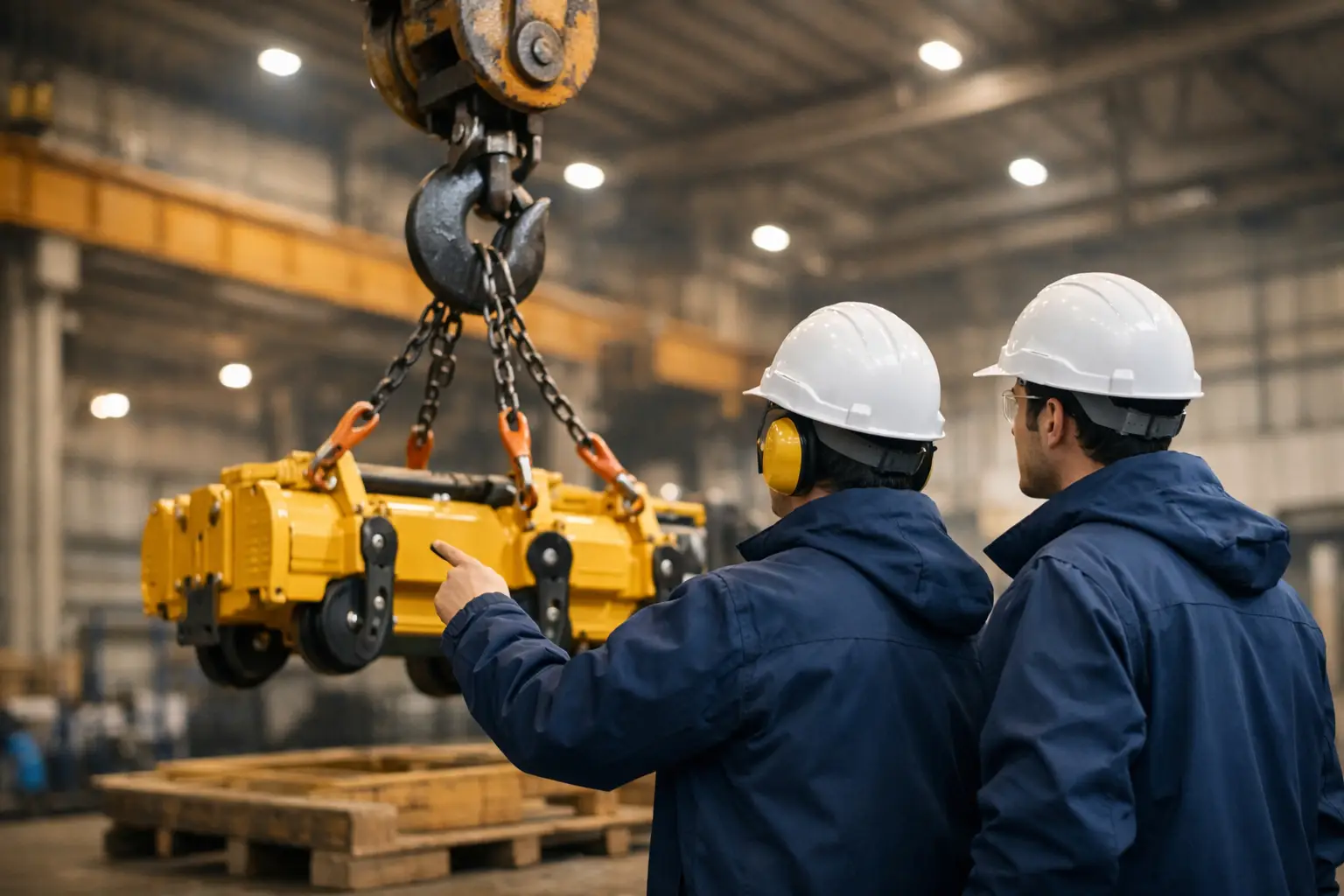
A hoist that is undersized can stop a production line, damage a load, or create an immediate safety risk. A hoist that is oversized can consume budget, add unnecessary dead weight to the supporting structure, and complicate installation. The practical question of how to select hoist capacity is therefore not answered by choosing the nearest rating above the weight written on a drawing. It requires a clear view of the actual load, the lifting method, the frequency of use, and the conditions at the point of lift.
For plant managers, project engineers, and maintenance teams, the right capacity is the one that provides a safe operating margin while fitting the crane system, building structure, workflow, and long-term service plan. Capacity selection should be completed before equipment is ordered, not corrected after a new hoist reaches site.
Start With the Total Suspended Load
The first figure to establish is the maximum total suspended load. This is more than the product, machine component, pallet, mold, or material being lifted. It includes every item carried below the hook during the lift.
Add the weight of the load-handling attachment, such as a lifting beam, spreader beam, pallet fork, vacuum lifter, magnet, grab, or purpose-built fixture. Also include slings, shackles, hooks, lifting clamps, and any other rigging that remains suspended. A 2-ton machine part handled with a 500-pound lifting beam and 150 pounds of rigging is not a 2-ton lift. The hoist sees the entire suspended assembly.
Use verified weights wherever possible. Manufacturer data, approved drawings, weighbridge records, and documented load tests are more dependable than estimates from operators or suppliers. Where load weight varies, specify the heaviest credible operating load, not the average load handled on a normal shift.
This distinction matters in facilities that occasionally handle maintenance items, replacement dies, or inbound equipment that exceeds their routine production loads. The rare lift is often the one that exposes a poor capacity decision.
How to Select Hoist Capacity Beyond the Load Rating
Once the total suspended load is known, the next step is to assess how that load behaves. A hoist rating is intended for a controlled, vertical lift within its specified operating conditions. It is not permission to lift an uncertain weight, shock-load a hook, pull a load sideways, or use damaged rigging.
A suitable capacity should account for the way the load is picked up and positioned. If a load can stick to a fixture, snag on a conveyor, or shift during lifting, the hoist may experience forces greater than the static weight suggests. Starting or stopping too quickly can also introduce dynamic effects. Good operating practice reduces these forces, but the equipment selection process should recognize whether such conditions are likely in daily work.
Do not treat additional capacity as a substitute for correct lifting practice. Side pulling, dragging, and sudden shock loading can damage a hoist, rope or chain, trolley, crane runway, and supporting structure even when the suspended load is below the rated capacity. The best solution may be a different lifting arrangement, improved load guidance, variable-speed control, or a purpose-designed attachment rather than simply selecting a larger hoist.
Consider the lifting angle and rigging arrangement
The hoist hook may carry the full load, but individual sling legs can carry considerably more force when they are angled away from vertical. As the sling angle becomes flatter, tension in each sling leg rises. This can limit the allowable load for the rigging and affect the design of lifting lugs or a lifting beam.
For uneven or off-center loads, confirm the center of gravity and the load path. A level-looking load is not necessarily balanced. If a fixture must rotate, tilt, or turn a component during handling, those movements should be considered during the engineering review. Hoist capacity, rigging capacity, and attachment capacity must work together as one lifting system.
Match Capacity to Duty Cycle and Operating Class
Two facilities can lift the same 2-ton load and require very different hoists. One may make a few maintenance lifts each month. The other may lift the same load every few minutes across two production shifts. The capacity may be identical, but the required duty rating, motor performance, brake design, reeving arrangement, and expected service life are not.
Duty cycle describes how often the hoist operates, how long it runs, how many starts occur, and how much of its rated load it handles. Frequent lifting near the rated capacity places greater demand on the hoist than occasional light-duty use. Selecting a unit based only on tonnage can lead to overheating, accelerated wear, brake problems, and avoidable downtime.
Discuss the real work pattern with the equipment engineer. Useful information includes lifts per hour, average lift height, average load, maximum load, number of shifts, travel distance, and whether precise positioning is required. A hoist used for repetitive mold changes or assembly work may benefit from variable-speed lifting and travel controls, even where a single-speed unit appears adequate on initial purchase price.
Check the Complete System, Not Just the Hoist
A higher-capacity hoist affects every part of the lifting installation. The trolley must be rated for the selected load. The crane girder, end carriages, runway beams, runway rails, columns, brackets, and building structure must also be reviewed for the applicable loads. In some cases, increasing hoist capacity by one size requires substantial structural changes that alter project cost and installation time.
Headroom is another practical constraint. A hoist with a larger frame or different reeving configuration may reduce the available hook height. In a warehouse, workshop, or production bay with limited ceiling clearance, lost hook travel can make a system unsuitable for tall equipment, racks, or transport vehicles.
Power supply and controls deserve the same attention. Confirm available voltage, phase, control voltage, cable management, pendant location, radio-control needs, and isolation requirements. If lifting takes place in a hot, wet, dusty, corrosive, or potentially hazardous environment, the hoist specification may need suitable protection features and components. These conditions influence cost, but they also determine whether the equipment will deliver reliable service over its intended life.
Allow for Future Work Without Buying Capacity You Cannot Use
Future-proofing is sensible when expansion plans are documented. A facility expecting larger tools, heavier assemblies, or a new production process may justify selecting a higher capacity now, particularly if later structural upgrades would disrupt operations. However, “just in case” is not an engineering basis by itself.
An oversized hoist can create hidden costs. It may require a heavier crane, stronger runway, larger electrical supply, more clearance, and more expensive replacement parts. It can also encourage operators to attempt lifts that exceed the capacity of the rigging or lifting attachment. The objective is fit-for-purpose capacity, supported by a realistic growth plan.
When future loads are uncertain, record the assumptions and assess options. It may be practical to design the runway and structure for a future upgrade while installing a smaller hoist initially. In other cases, a separate lifting point for occasional heavy maintenance work is more economical than oversizing a daily-use production hoist.
Verify Ratings, Documentation, and Safe Use
Before commissioning, confirm that the rated capacity is clearly marked on the hoist and that compatible ratings are established for the crane, trolley, hook block, lifting attachments, and rigging. The lowest-rated component in the load path governs the allowable lift.
A sound capacity-selection process should also produce usable records for operations and maintenance teams. Keep load data, equipment specifications, inspection requirements, operating instructions, and any site-specific lifting restrictions accessible. Operators should know the rated capacity, but they also need to understand which attachments are approved, how to identify damaged rigging, and when a lift requires additional planning.
For specialized applications, an engineering assessment can prevent costly assumptions. MFEI works with site teams to assess load details, space limitations, operating patterns, structural interfaces, installation requirements, and maintenance access before finalizing a lifting solution. That early review helps balance safety, uptime, and capital cost across the full equipment lifecycle.
The right hoist capacity is not simply the largest number that fits the budget. It is the rating that safely carries the complete load, suits the actual duty, works within the facility, and can be supported through years of operation. When the load or application is unclear, pause the specification process and establish the facts first. That is usually the most cost-effective lift decision a facility can make.
3 responses to “How to Select Hoist Capacity for Safe Lifting”
[…] not be the only one. The heaviest item being lifted is only part of the calculation. The selected crane and hoist must also account for below-the-hook devices, lifting beams, hooks, slings, grabs, magnets, or […]
[…] Rated load capacity is a critical starting point, but it does not define the full system. The actual lifted weight includes the item, below-the-hook lifting attachment, slings, spreader beams, hooks, and any other load-handling device. The crane, hoist, runway, foundation, and supporting structure must be designed for the complete applied load and intended duty. […]
[…] is where fit-for-purpose equipment selection matters. Increasing capacity alone may not solve an overheating issue if the real requirement is a higher-duty hoist, a different […]