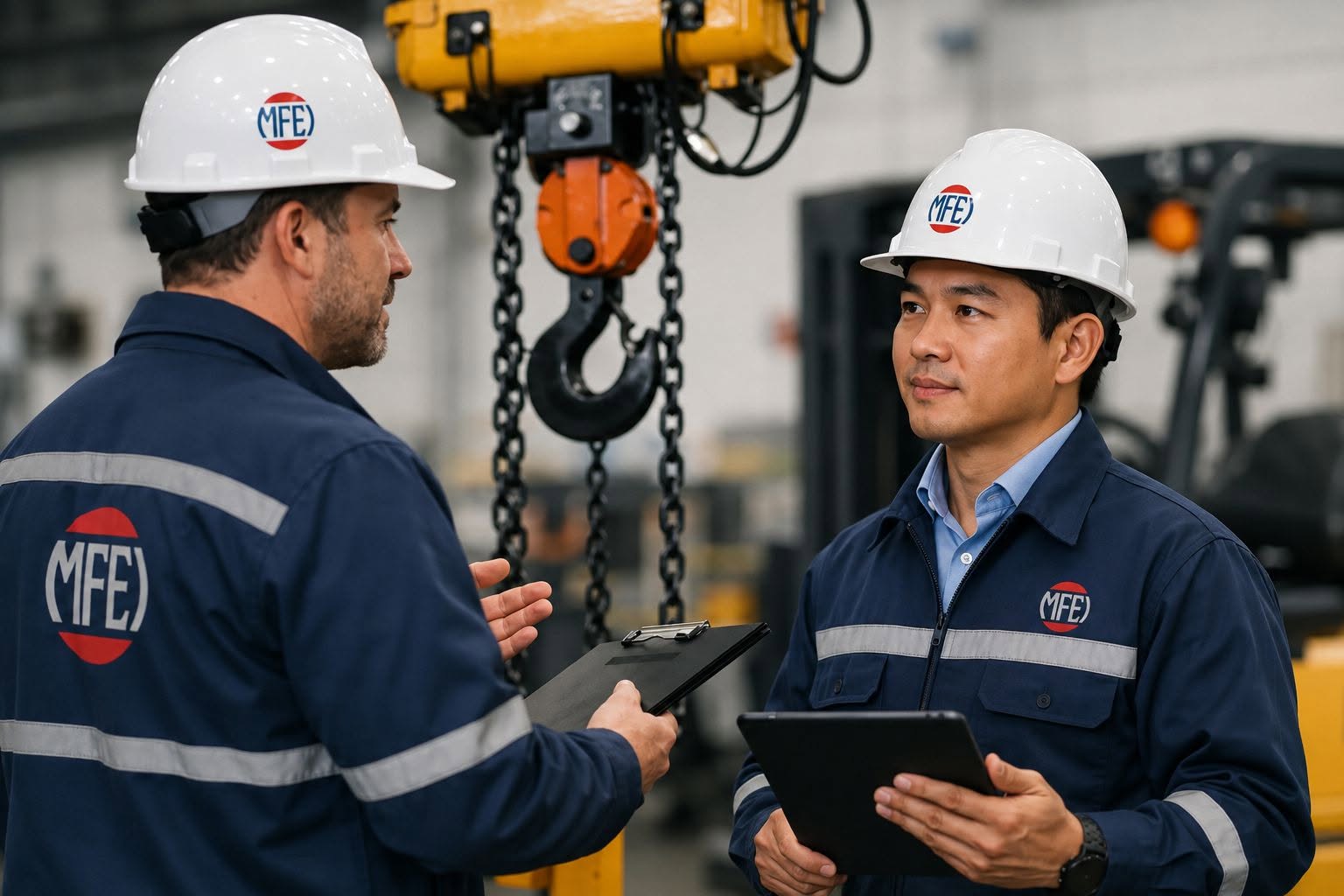
A crane or hoist rarely fails at a convenient time. When a lifting system stops in the middle of a production run, loading operation, or maintenance shutdown, the cost extends beyond the repair itself. Material cannot move, teams wait, delivery schedules slip, and safety exposure increases. Choosing a lifting equipment supplier is therefore not simply a purchasing decision. It is a decision about engineering support, installation quality, equipment availability, and the long-term reliability of a critical operational asset.
The right supplier should understand how work moves through your facility before recommending a product. A standard unit may be suitable for a straightforward, low-frequency lift. However, a busy manufacturing line, warehouse transfer point, or heavy fabrication bay may require a system engineered around duty cycle, travel path, headroom, operating environment, and future capacity requirements. The best result is fit-for-purpose equipment supported by people who can remain accountable after commissioning.
Start With the Actual Lifting Requirement
A lifting system should be selected from the work backward, not from a catalog forward. Begin by documenting what is being lifted, how often it is lifted, where it must travel, and how accurately it must be positioned. Maximum rated capacity matters, but it is only one part of the engineering picture.
Consider the normal load as well as the heaviest expected load. An application that routinely handles a 3-ton load has different requirements from one that occasionally lifts 3 tons but spends most of its time handling lighter components. Frequency of operation, lift height, travel distance, speed, load control, and the number of shifts all affect the appropriate hoist, crane, winch, and supporting structure.
Look Beyond Rated Capacity
A supplier should ask detailed questions about the load and the workplace. Long, awkward, or unstable loads may need specialized lifting beams, multiple lifting points, anti-sway measures, or careful load-path planning. Hot, dusty, humid, corrosive, or outdoor environments can influence component selection and protection requirements.
Site limitations are equally significant. Low roof clearance may affect crane configuration and hook approach. Existing columns, building steel, electrical supply, access routes, and floor space can determine whether an overhead crane, jib crane, monorail, gantry system, or another material-handling approach is the practical option. A recommendation that ignores these constraints can create expensive changes during installation.
What a Lifting Equipment Supplier Should Provide
A capable lifting equipment supplier should provide more than a price for a named product. The supplier should be able to assess the application, develop a practical technical proposal, explain the basis of the selection, and coordinate installation with minimal disruption to site operations.
This does not mean every application needs a fully custom system. Standardized equipment can offer value, lead-time benefits, and easier parts support when it genuinely matches the job. Custom engineering becomes worthwhile when the site, load, workflow, or budget constraints make a standard arrangement inefficient or unsafe. The supplier’s role is to identify that distinction honestly.
For complex projects, ask who is responsible for the complete scope. Equipment design, runway or supporting-steel considerations, electrical controls, installation, load testing, commissioning, operator handover, documentation, and maintenance planning should not be treated as unrelated tasks. Clear responsibility reduces handoffs, assumptions, and avoidable delays.
Engineering Input Must Be Practical
Engineering capability has value when it leads to workable decisions on the shop floor. A good supplier can explain why a particular lifting arrangement is suitable, what limitations apply, and which options would improve safety or productivity. They should also be direct about trade-offs.
For example, faster lifting speeds may improve throughput but can make precise positioning more difficult. Higher duty classifications may increase initial cost but better suit frequent production use. A lower-cost system may be appropriate for occasional maintenance lifting, while a production-critical application may justify greater redundancy, control features, and service coverage. The right answer depends on operational risk, not just the purchase budget.
Assess Installation and Commissioning Capability
Even well-specified equipment can underperform if installation is poorly planned. Installation work may involve working at height, restricted production windows, structural interfaces, electrical integration, and coordination with other contractors. These conditions require more than product knowledge.
Ask how the supplier plans site access, lifting activities, safety controls, and commissioning. Confirm whether the installation team is familiar with the type of facility and whether the proposed schedule accounts for production needs. A realistic plan should address equipment delivery, assembly space, shutdown requirements, testing, and handover responsibilities before work begins.
Commissioning should verify that the system operates as intended under the expected conditions. It should include functional checks of lifting and travel motions, controls, limit devices, safety features, and load handling. Operators and maintenance personnel also need clear instruction on correct operating practices, routine inspections, and the conditions that require equipment to be removed from service.
For facilities in Malaysia, local availability and responsive on-site support can be particularly valuable when installation schedules are tight or equipment is needed to support active production. A distant supplier may offer an attractive initial quote, but delays in technical attendance, parts supply, or warranty response can quickly offset that saving.
Service, Parts, and Maintenance Protect the Investment
The most useful question is not only, “What will this system cost to buy?” It is also, “What will it take to keep this system available for the next several years?” Lifting equipment contains wearing components, electrical parts, controls, wire ropes or chains, brakes, bearings, and safety devices that require inspection and maintenance based on actual use.
A supplier with a maintenance capability can help establish inspection intervals, identify developing issues before they cause a failure, and document work completed. This supports safer operation and makes maintenance spending more predictable. It also gives site teams a clearer record of the equipment’s condition over time.
Spare-parts readiness deserves close attention. Ask whether commonly required parts are stocked locally, how emergency requests are handled, and whether the supplier can identify parts accurately from equipment records. Low-priced equipment can become costly when a failed component has a long lead time or when technical support cannot determine the correct replacement quickly.
MFEI approaches lifting systems as full-lifecycle equipment, combining engineering, installation, spare-parts support, and maintenance so customers can manage both immediate project needs and long-term operational performance.
Questions to Ask Before Appointing a Supplier
Before comparing proposals, make sure each supplier has responded to the same operating requirements. This makes differences in scope, assumptions, and service coverage easier to identify. The following questions can expose gaps that a basic quotation may not show:
- Has the supplier assessed the load, duty cycle, travel path, site dimensions, and operating environment?
- Does the proposal clearly state what is included for design, installation, testing, commissioning, and operator handover?
- What maintenance support is available after installation, and what response time can the supplier reasonably provide?
- Which critical spare parts are available locally, and how are urgent breakdown requests handled?
- Can the supplier explain the equipment selection, operating limitations, and lifecycle cost implications in practical terms?
A clear answer is more useful than a broad promise. Suppliers should be prepared to identify exclusions, site dependencies, and any information still required before final design. Transparency at this stage is usually a good indicator of how the project will be managed later.
Make the Decision on Lifecycle Value
The lowest initial quotation is not always the lowest-cost option. Compare proposals on scope completeness, equipment suitability, installation method, anticipated service requirements, parts availability, warranty terms, and technical accountability. A small difference in purchase price can be insignificant compared with a single extended outage in a production-critical area.
It is also worth considering how the system may need to change. If production volumes grow, products become heavier, or the facility layout is revised, can the lifting arrangement be adapted? Planning for realistic future needs can prevent an early replacement, but overdesigning for a possibility that may never occur can tie up unnecessary capital. The practical approach is to define likely scenarios and select an appropriate margin.
A reliable lifting partner will be willing to work through these decisions with your operations, maintenance, engineering, and procurement teams. The goal is not the most elaborate system on paper. It is equipment that fits the site, supports safe work, remains serviceable, and keeps materials moving when your operation needs it most.