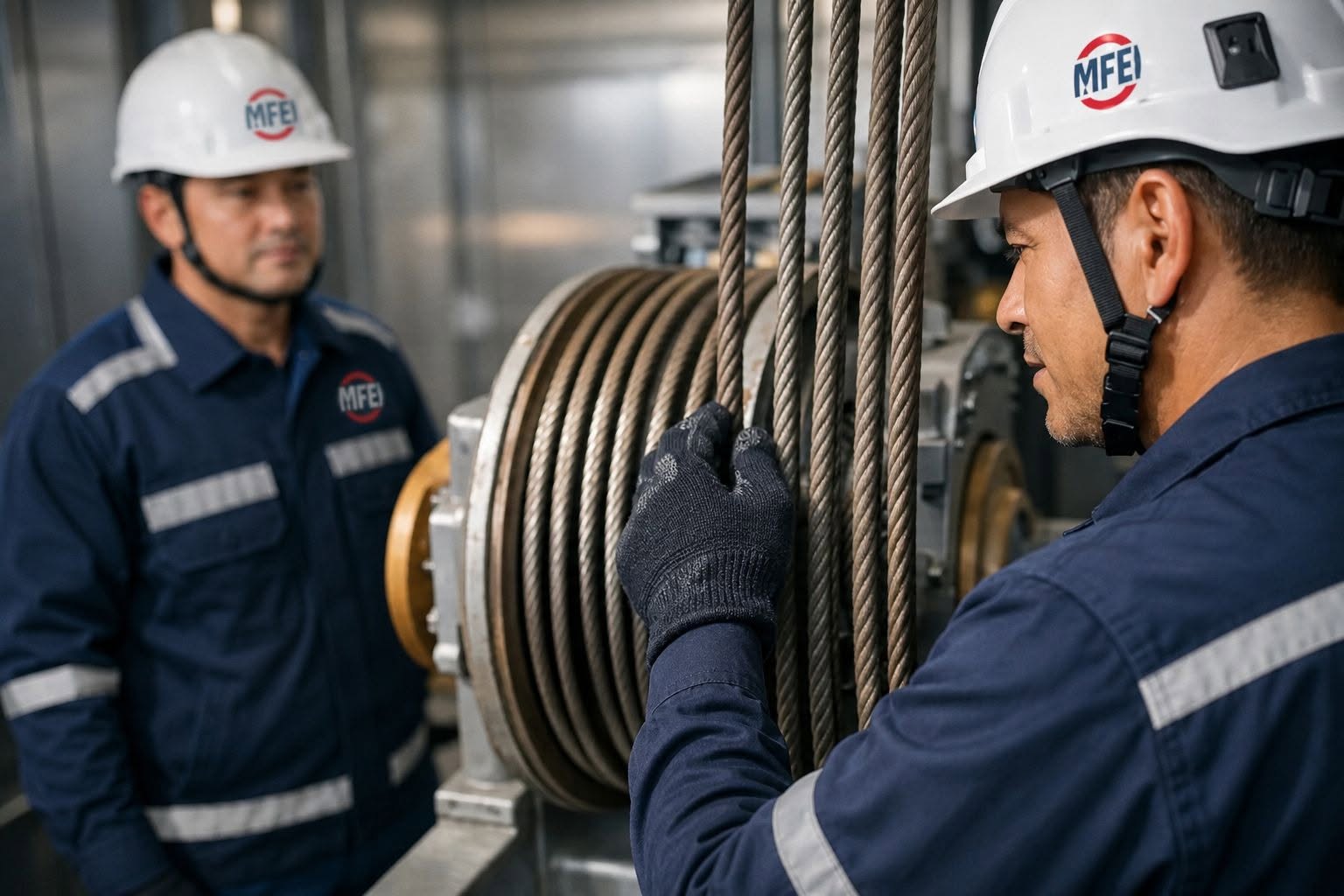
A hoist rope can look serviceable from several feet away while already carrying damage that changes how it performs under load. The practical question is not simply when should hoist ropes be replaced, but whether the rope can continue to lift safely within its specified operating limits. For plant and maintenance teams, a correct decision protects people, prevents unplanned downtime, and avoids secondary damage to drums, sheaves, hooks, and other lifting components.
There is no universal calendar date for replacing every hoist rope. Replacement must be based on inspection findings, the manufacturer’s requirements, duty cycle, load history, environment, and the applicable safety regulations at the site. A lightly used indoor hoist may deliver many years of service. A rope exposed to frequent heavy lifts, abrasive dust, moisture, heat, or corrosive chemicals may require replacement much sooner.
When Should Hoist Ropes Be Replaced?
Hoist ropes should be removed from service when inspection identifies deterioration beyond the allowable limits set by the hoist manufacturer and the relevant inspection standard. The decision should be made by a competent person who understands the rope construction, reeving arrangement, working conditions, and the equipment’s inspection criteria.
The most visible reason for replacement is broken wires. Individual wire breaks reduce the rope’s strength and can signal fatigue caused by repeated bending over sheaves or winding on the drum. The number, distribution, and location of broken wires matter. A few breaks concentrated in one short length can be more serious than the same number spread across a longer section.
Loss of rope diameter is another major concern. Diameter reduction may result from wear, internal core deterioration, corrosion, or excessive loading. It is not enough to judge this by sight. Technicians should measure the rope at several locations using the correct method, compare the readings against its nominal diameter, and record the trend over time.
A rope must also be replaced if it shows serious corrosion, kinking, crushing, birdcaging, flattening, heat damage, or evidence of electrical arcing. These conditions can alter the rope’s internal structure even where the outer wires appear mostly intact. A distorted rope cannot move correctly through sheaves and drums, increasing wear throughout the hoisting system.
Warning Signs That Need Immediate Attention
Operators are often the first people to notice a change in rope condition. Any unusual behavior should be reported and assessed before the next lift, particularly if the hoist handles critical or high-value loads.
The following conditions warrant prompt inspection and may require the rope to be taken out of service:
- Broken wires, sharp wire ends, or localized clusters of wire breaks
- Noticeable diameter loss, severe abrasion, or uneven wear
- Rust, pitting, chemical attack, or dried lubricant that exposes the rope to corrosion
- Kinks, loops, crushing, birdcaging, flattening, or sections that do not lie naturally
- Damaged end terminations, poor drum spooling, or rope layers that cross and pinch each other
- Abnormal noise, vibration, jerking, or hesitation during lifting and lowering
Do not try to straighten a kinked rope and return it to service. Kinking permanently damages the rope’s geometry and can significantly reduce lifting capacity. Similarly, applying fresh lubricant may improve surface appearance, but it does not correct internal corrosion, fatigue, or mechanical damage.
Pay Close Attention to High-Stress Zones
Damage is rarely uniform along the full length of a hoist rope. Inspections should focus on areas that experience repeated bending, loading, or contact pressure. This includes sections passing over sheaves, the portion that lands on the drum at normal hook height, crossover points between drum layers, rope end connections, and the area near the lower block.
A rope may also wear faster where sheave grooves are undersized, damaged, misaligned, or filled with debris. If the groove does not properly support the rope, the outer wires are subjected to concentrated pressure. Replacing the rope without correcting the sheave or drum condition can lead to an early repeat failure.
Why Time-Based Replacement Alone Is Not Enough
Some facilities use a fixed replacement interval because it simplifies planning. Scheduled renewal can be sensible for severe-duty equipment, especially where the operating environment is consistent and downtime must be tightly controlled. However, time alone is not a reliable measure of rope health.
Two identical hoists can have very different rope lives. One may lift moderate loads a few times per day in a clean workshop. The other may run multiple shifts, frequently approach rated capacity, operate outdoors, or handle materials that create dust, moisture, and corrosive exposure. The second rope is likely to accumulate bending fatigue and wear much more quickly.
A condition-based approach is usually more effective. It combines documented inspections with an understanding of the actual lifting duty. This helps maintenance teams replace ropes before a safety issue develops while avoiding unnecessary replacement of a rope that remains within acceptable service condition.
Build Inspection Into Normal Hoist Maintenance
Routine operator checks and formal periodic inspections serve different purposes. Operators should conduct visual checks before use or at the start of a shift, looking for obvious damage, poor spooling, unusual movement, and changes in operating sound. They should not continue to operate equipment that appears unsafe.
Periodic inspections should be more detailed and performed by a competent inspector. The inspection record should identify the hoist, rope specification, date, observed defects, measured diameter where required, lubrication condition, corrective action, and the person responsible for the assessment. Clear records make it easier to see whether a condition is stable or getting worse.
Inspection frequency should reflect the service classification and environment. Equipment operating in demanding production conditions needs more frequent attention than equipment used occasionally for light maintenance work. Heavy cycling, shock loading, outdoor exposure, high temperatures, corrosive atmospheres, and poor drum spooling all justify a more conservative inspection plan.
Replace the Rope as Part of a System Repair
Selecting a replacement rope is not a matter of matching diameter alone. The new rope must match the hoist manufacturer’s required construction, grade, lay direction, core type, and minimum breaking strength. An incorrect rope can affect drum winding, sheave contact, reeving performance, and safe operation.
The replacement process should also include a check of the drum grooves, sheaves, bearings, rope guides, limit switches, equalizer sheaves, and end terminations. If a rope failed early because of a worn groove or misalignment, fitting a new rope without addressing the cause only delays the next problem.
Correct installation is equally important. The rope must be reeved properly, anchored using the approved method, lubricated as specified, and spooled under sufficient tension to establish neat, tight wraps on the drum. After installation, the hoist should be inspected and tested in accordance with the manufacturer’s instructions and site procedures before it returns to normal service.
For multi-fall reeving arrangements, maintain the correct rope lengths and reeving balance. Uneven rope tension can cause accelerated wear, poor hook block travel, and increased loading on individual rope parts. These issues may not be obvious during a quick visual check but can have a direct effect on rope life.
Plan Replacement Before It Becomes an Emergency
A rope that is approaching retirement should trigger planning, not panic. Maintenance teams can use inspection trends to schedule replacement during a planned shutdown, confirm the correct rope specification, and arrange the required lifting support and competent installation personnel. Holding suitable critical spare parts can also reduce the duration of an outage.
For facilities in Malaysia, access to responsive local technical support and properly specified replacement components can make the difference between a controlled maintenance task and a prolonged production interruption. MFEI supports lifting equipment throughout its service life, including inspection-led maintenance and replacement work aligned with site operating requirements.
The best time to replace a hoist rope is before deterioration reaches a point where safety, availability, or confidence in the lift is compromised. Treat every inspection finding as operational information, investigate the cause of accelerated wear, and give the replacement rope the conditions it needs to deliver its intended service life.
2 responses to “When Should Hoist Ropes Be Replaced Safely?”
[…] also requires a disciplined approach. Wire rope must be inspected for broken wires, kinking, crushing, corrosion, diameter reduction, and poor spooling. The drum grooves, rope guide, […]
[…] failure. Brakes may become noisy, slip, drag, or show abnormal wear. Wire ropes can develop broken wires, corrosion, kinking, crushing, or uneven winding. Chain can elongate or wear at contact points. […]